Peniel Environmental — property restoration in New England

Free on-site assessment

Oil Tank Abandonment-in-Place

When a buried tank sits under a porch, a driveway, or too close to the foundation to dig out, abandonment-in-place is the accepted alternative: the tank is emptied, cleaned, and filled so it can’t collapse or hold product. Peniel Environmental abandons tanks to the applicable code and documents it — a legitimate option when removal isn’t practical.

Call (603) 541-7979 Available 24/7 · free on-site assessment

Start Here, It’s Free

Free on-site assessment Written scope & price Licensed & insured
Oil Tank Abandonment-in-Place — the problem we remediate

The problem

Emptied, Cleaned, Filled

The tank is drained of product and sludge, cleaned, and filled with an inert material so it’s inert and stable underground. Done to code, it’s a recognized way to retire a tank you can’t excavate.

More about this service

The approach

When Abandonment Is the Right Call

If a tank is inaccessible or removal would mean tearing up a structure, abandonment-in-place is often the sensible, code-compliant choice. Where removal is feasible, we’ll tell you — it’s the more definitive option.
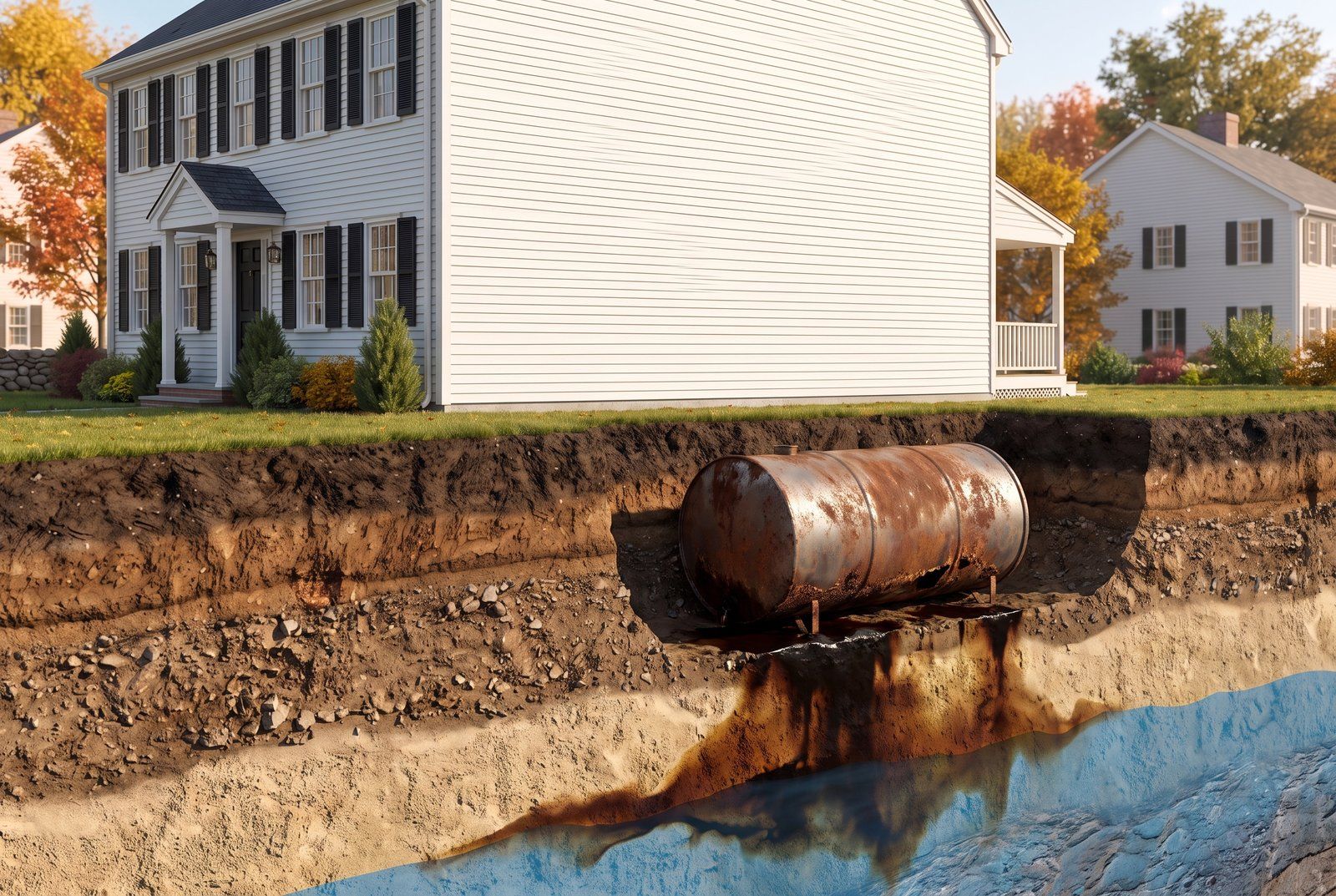
Cutaway illustration of a buried heating-oil tank beside a New England home, corroded and leaking oil down through the soil toward the groundwater and foundation.
The steel corrodes Decades underground rust the buried tank until the shell finally fails.
Product escapes Heating oil seeps out and soaks into the surrounding soil.
Groundwater at risk The plume migrates down toward the water table below.
  1. The steel corrodes. Decades underground rust the buried tank until the shell finally fails.
  2. Product escapes. Heating oil seeps out and soaks into the surrounding soil.
  3. Groundwater at risk. The plume migrates down toward the water table below.
A buried oil tank fails from the outside in. By the time it’s noticed, the leak is usually already in the soil — which is why removal and soil checks go together.

How it works

A Documented Process, First Look to Verified Result.

  1. 01 Assessment & Locate We find the tank, check access, and pull the required permits.
  2. 02 Pump & Clean Residual oil and sludge are removed and disposed of properly.
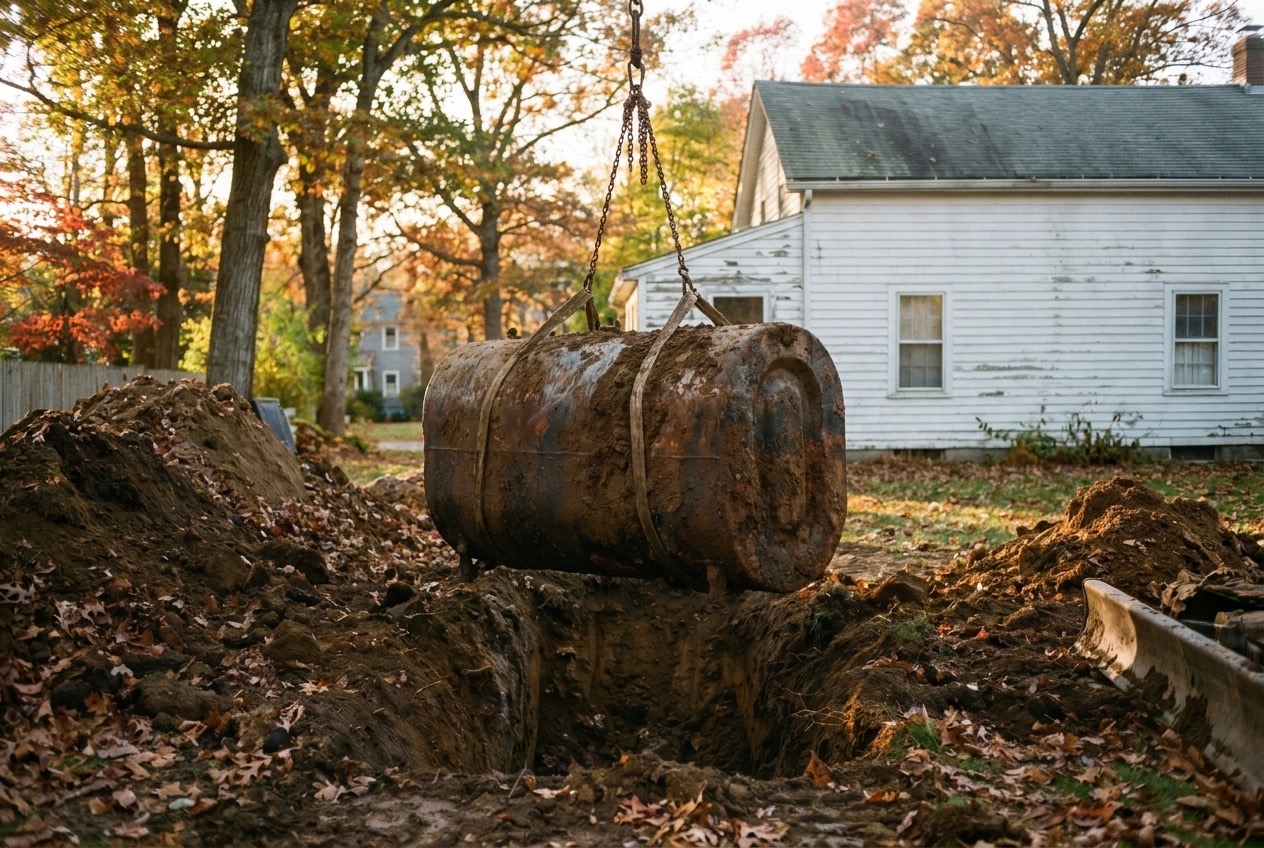
  3. 03 Excavate & Remove The tank is excavated or cut out and hauled off as regulated waste.
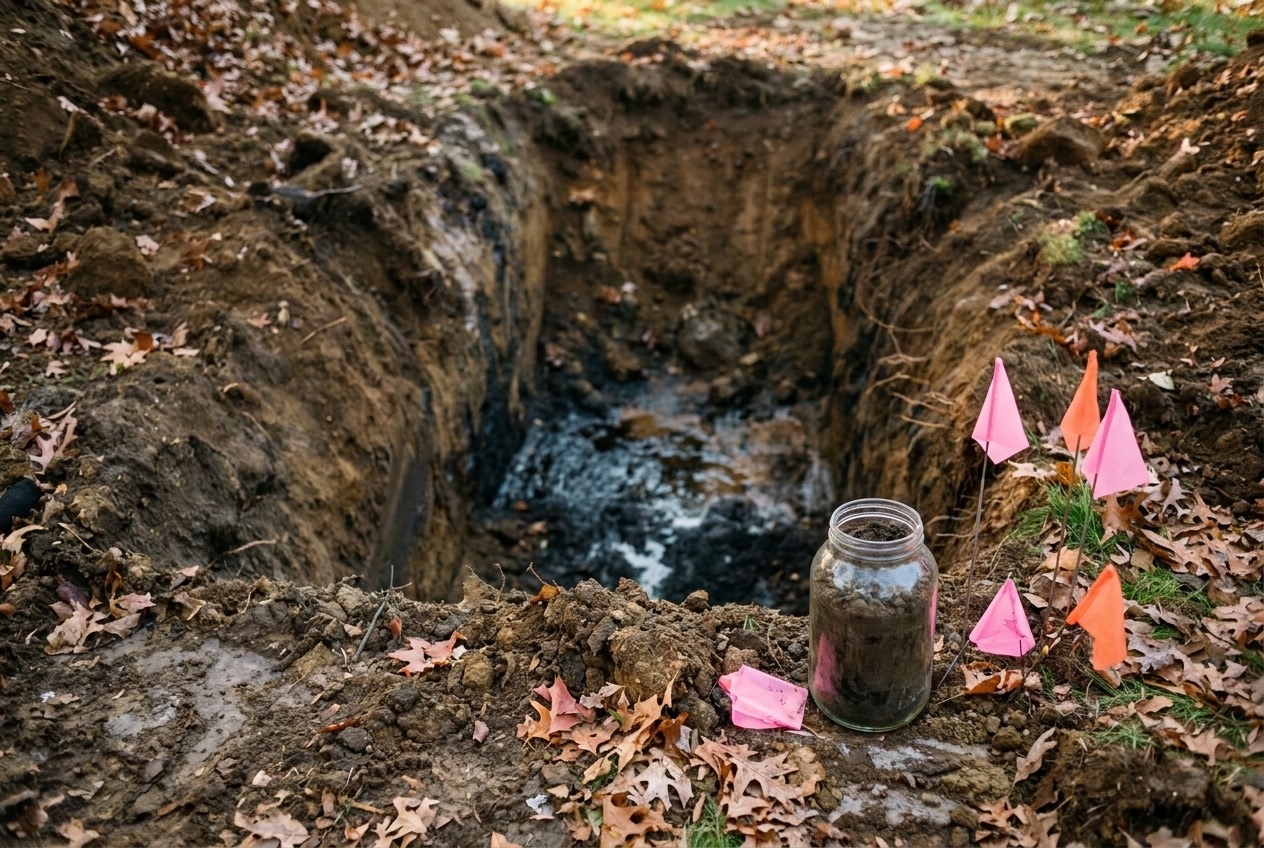
  4. 04 Soil Testing Surrounding soil is sampled to confirm there’s no contamination.
  5. 05 Backfill & Documentation The site is restored and you receive full closure paperwork.
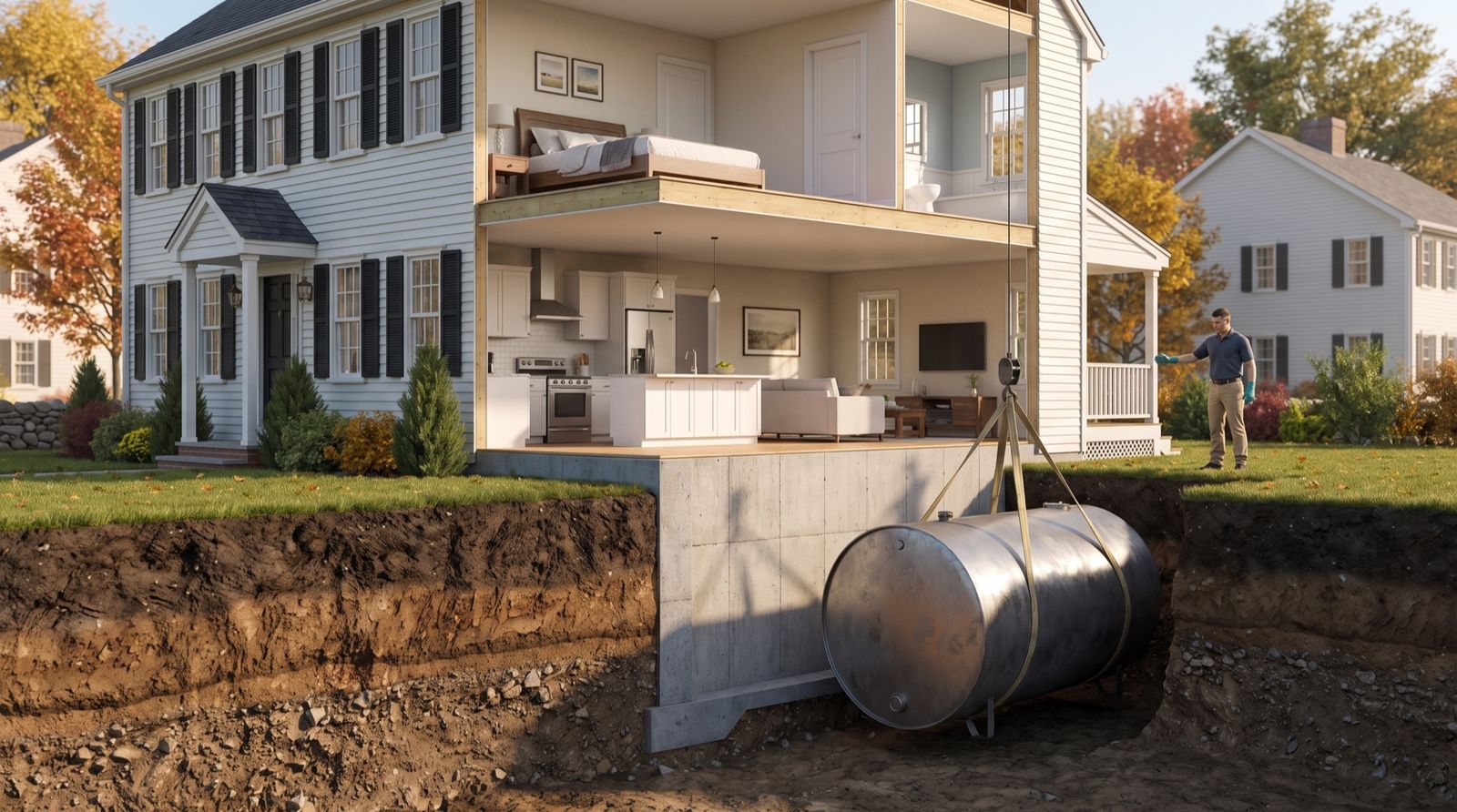
Cutaway cross-section illustration of a New England home with the yard soil cut away — a buried steel heating-oil tank being hoisted out of the excavation beside the foundation as a technician directs

Related services

More Tank Removal Services

Buried Oil Tank Removal

Excavation and removal of underground yard tanks with soil testing.

Learn more

Basement Tank Removal

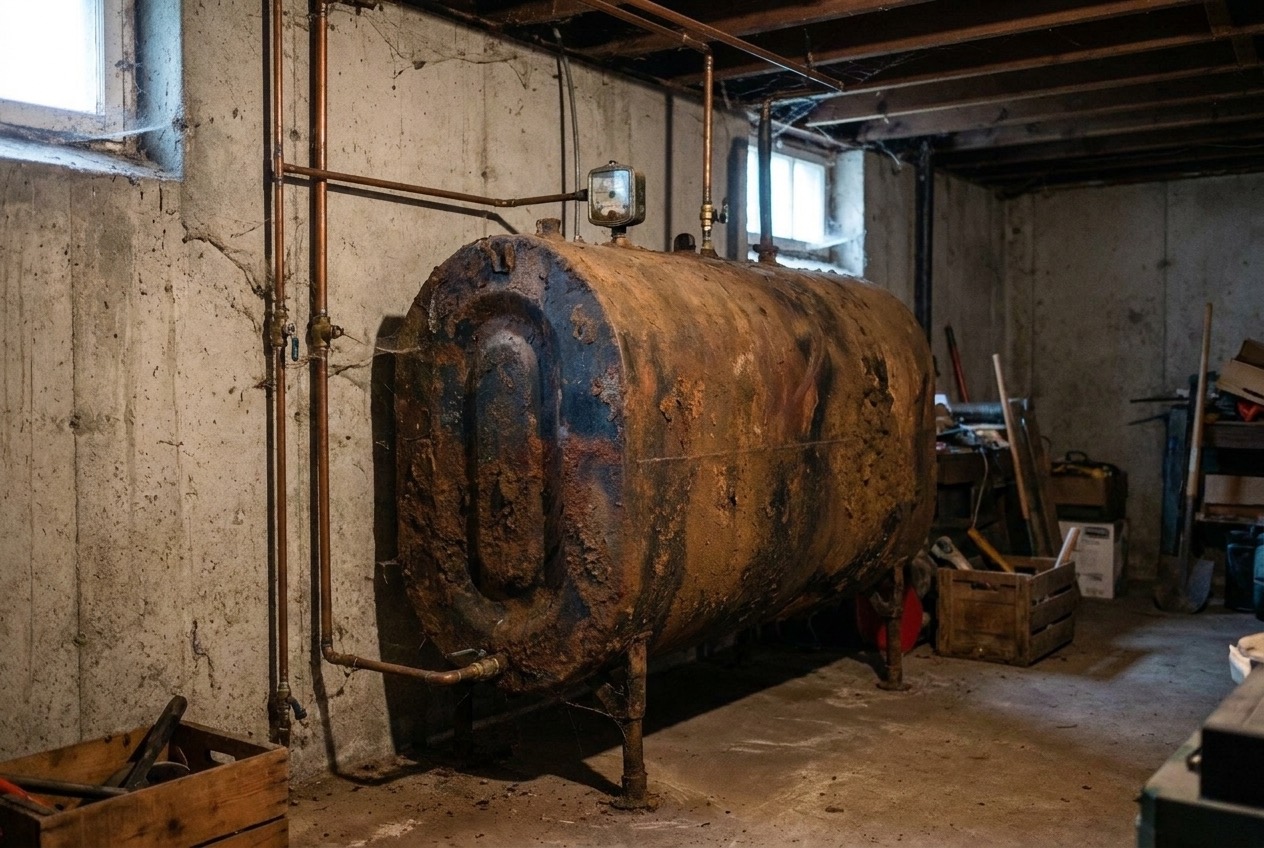
Cut-out and haul-off of above-ground indoor heating-oil tanks.

Learn more

Soil Testing & Remediation

Testing and cleanup where a tank has leaked into the ground.

Learn more
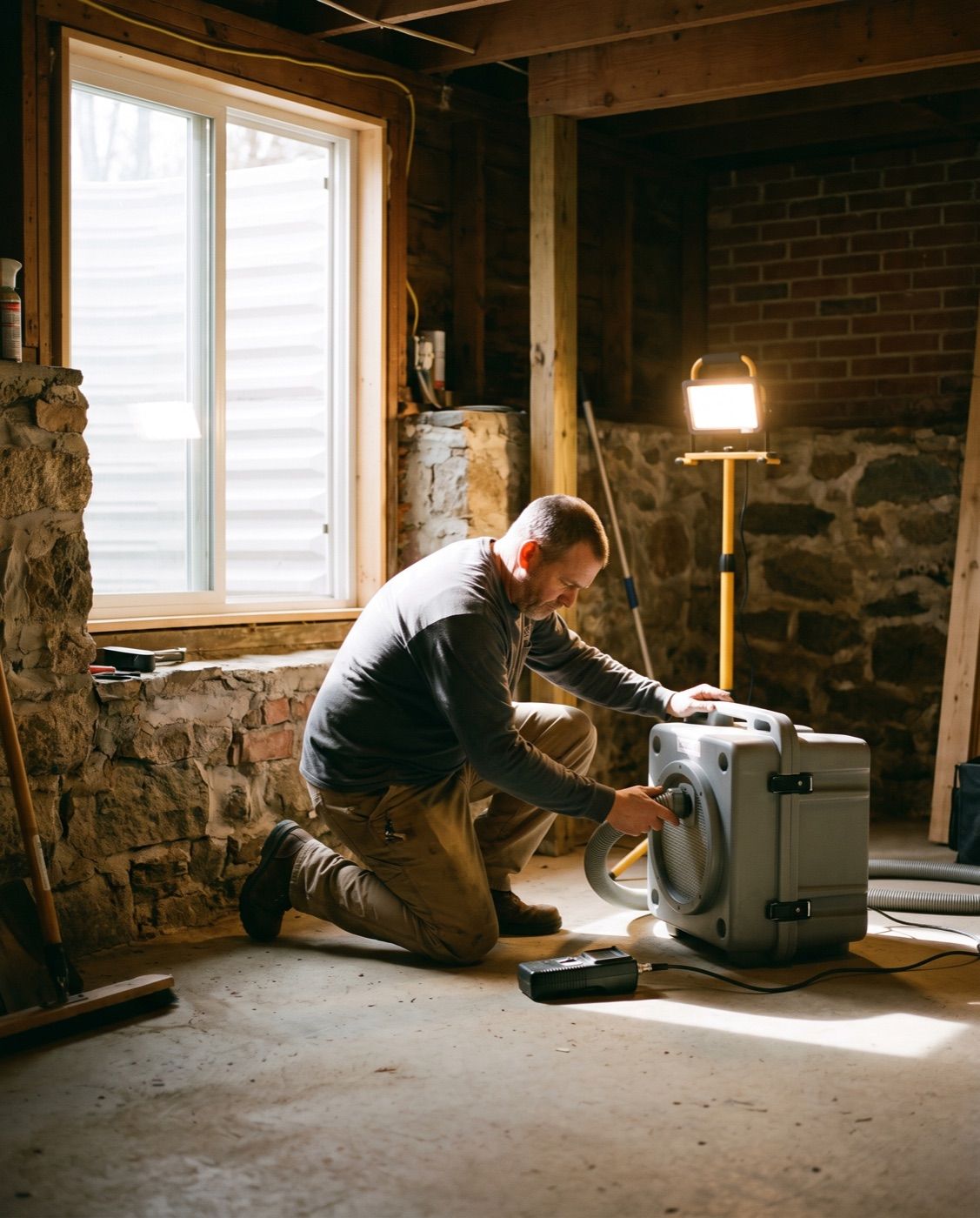
HEPA air scrubber and moisture meter set up during a New England remediation

Why Peniel

Trust Built on Standards, Not Slogans.

  • Licensed & Permitted
    We pull the permits and follow state removal and disposal rules.
  • Free On-Site Assessment
    We locate the tank and scope access, removal, and disposal.
  • Soil Testing & Closure Docs
    Verified results and paperwork for your town and future buyers.
  • Sale-Timeline Friendly
    We work to your closing date when a tank turns up in diligence.
  • Clear Pricing Before Work Begins
    Full scope and cost agreed upfront — in writing.
  • Straight Answers
    We tell you what the site needs, and what it doesn’t.

Common questions

Before You Call, the Honest Answers.

Is abandoning a tank in place legal?

Yes, when it’s done to the applicable code — emptied, cleaned, and filled, with documentation. It’s a recognized alternative when excavation isn’t practical.

Why not just remove it?

Removal is preferable when it’s feasible, but a tank under a structure or driveway may not be excavatable without major disruption. Abandonment is the accepted option in those cases.

Will it affect selling my home?

A properly documented abandonment is defensible in a sale. We provide the paperwork so there’s a clear record of how the tank was retired.

Peniel Environmental technician assessing oil tank abandonment-in-place damage in a New England home

Get a Free Tank Assessment

A licensed technician will assess the tank, recommend removal or abandonment, and give you a written scope and price — no obligation.

Prefer to talk? (603) 541-7979

Call Now