Mold
How Ice Dams Cause Attic Mold — and How to Stop It
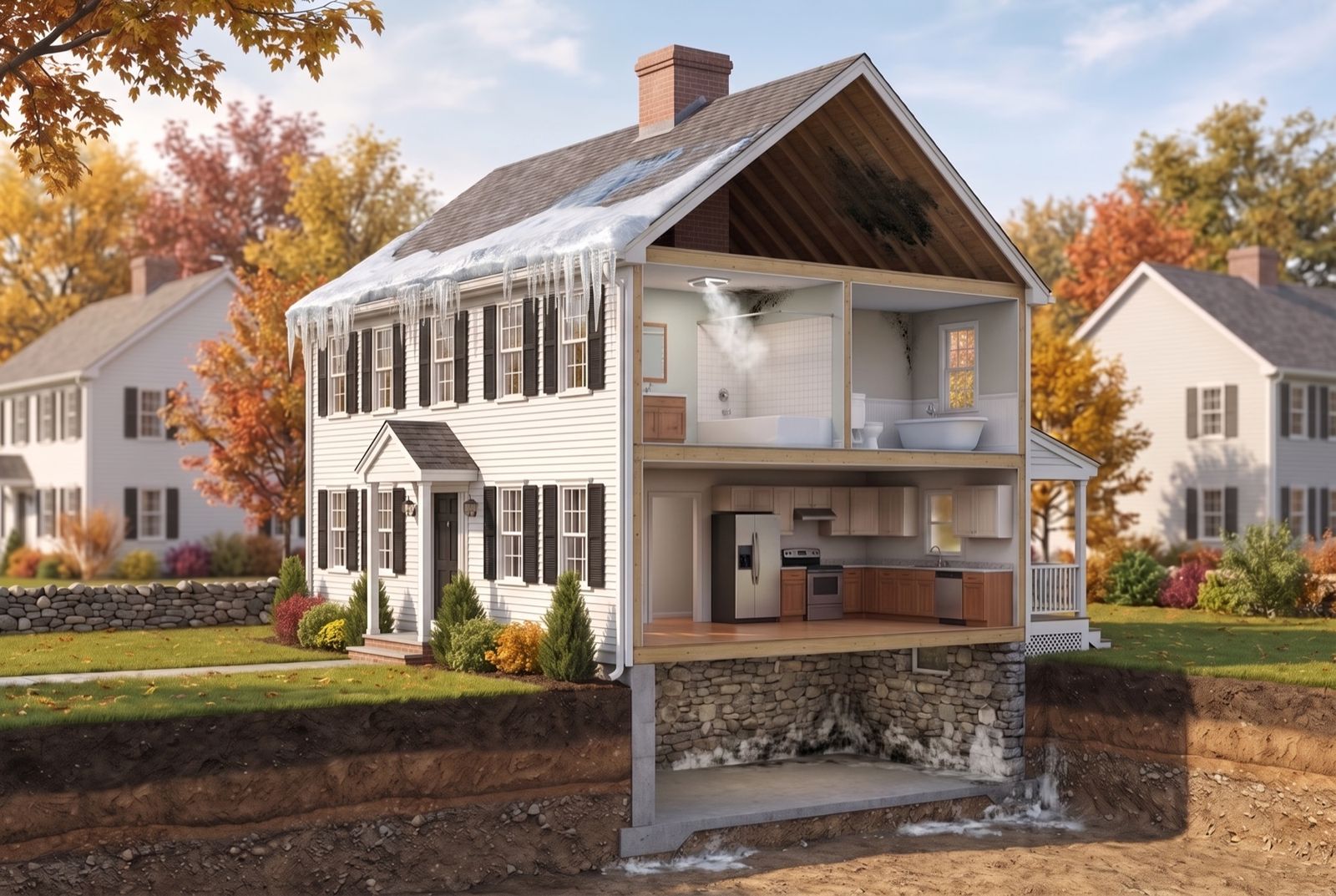
If you live in New Hampshire, Massachusetts, or anywhere the snow sits on the roof for months, attic mold is less a question of if than where. And the cause is almost always the same: ice dams.
What an ice dam actually does
Warm air escaping into the attic melts the underside of the snowpack. That meltwater runs down to the cold eave, refreezes into a ridge of ice, and backs up under the shingles. From there it soaks the roof sheathing — the wood you see when you look up in the attic — and keeps it wet for weeks.
Wet wood plus the still, humid air of a closed-up winter attic is exactly what mold needs. By spring, the underside of the roof is stained black.
The warning signs
- Dark staining on the roof sheathing or rafters, usually worst near the eaves.
- A musty smell in the top floor of the house.
- Frost or damp insulation in the attic during a cold snap.
- Icicles and thick ice ridges along the gutters in winter.
Why cleaning alone doesn’t work
You can HEPA-vacuum and treat the stained wood, and it will look clean. But if the ventilation and air-sealing problems that let the attic get wet are still there, the mold comes back the next winter. That’s why every remediation we do includes tracing and correcting the moisture source — sealing air leaks, restoring soffit-to-ridge airflow, and re-routing bath fans that vent into the attic.
The fix
Remediation is the visible part; ventilation is the durable part. Get both right and the attic stays dry through the next freeze. A free assessment will tell you which of the two your roof actually needs. Peniel provides mold removal across New Hampshire, including mold removal in Concord.