Peniel Environmental — property restoration in New England

Free on-site assessment

Professional Mold Removal Across New England

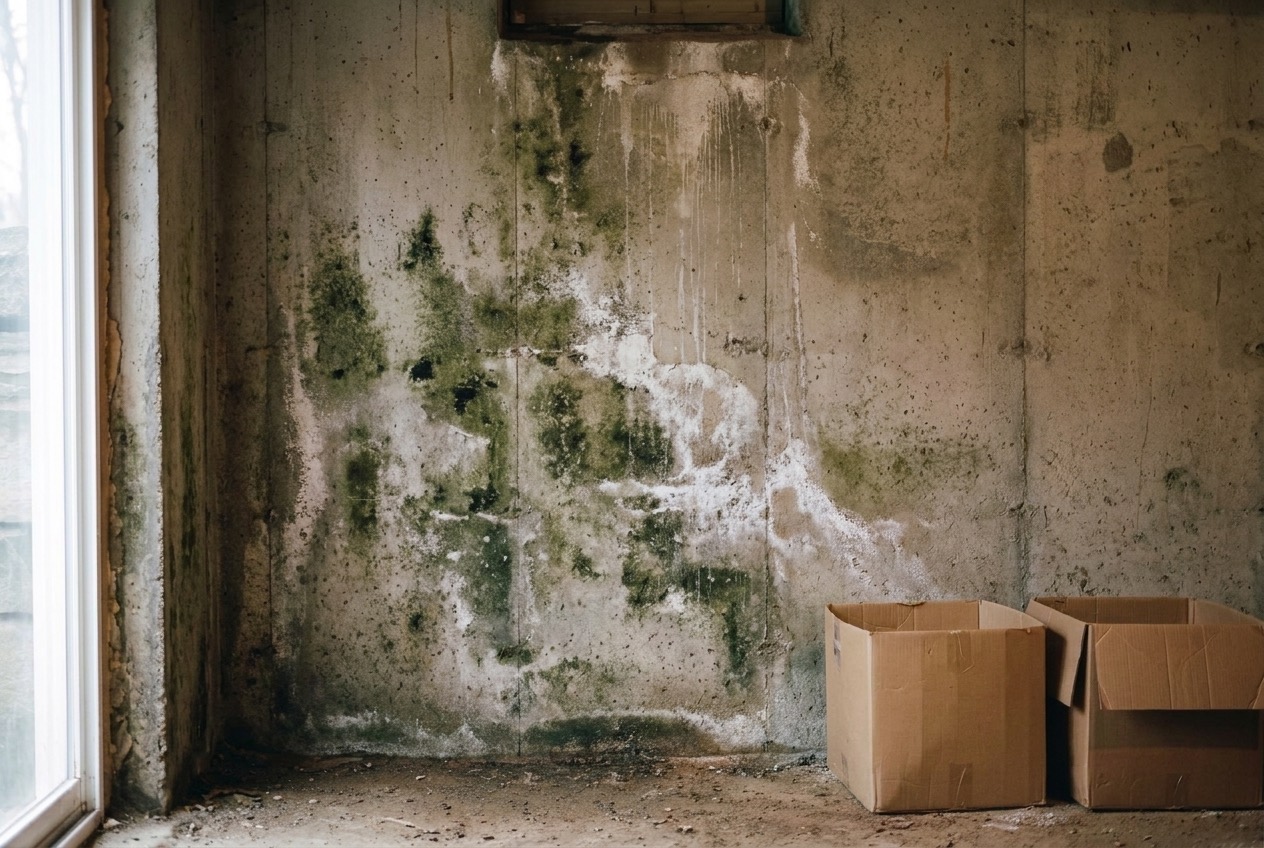
New England houses earn their mold. Ice-dam winters, humid summers, stone foundations, and some of the oldest housing stock in the country combine into year-round moisture pressure — and mold follows moisture every time.

Call (603) 541-7979 Available 24/7 · free on-site assessment

Start Here, It’s Free

Free on-site assessment Written scope & price Licensed & insured
Professional Mold Removal Across New England — the problem we remediate

The problem

Remediation That Ends With Proof

Containment under negative air pressure, removal of contaminated materials, HEPA cleaning and treatment, drying, and source correction — then an independent air sample that shows spore levels back to normal. The clearance test is the difference between a surface that looks clean and a building that is.

More about this service

The approach

The Moisture Comes First

Every remediation we do includes finding and correcting what fed the growth — an ice-dammed roof, a wet fieldstone basement, a failed bathroom fan. Removing mold without fixing the water is renting a result. Fixing both is owning it.

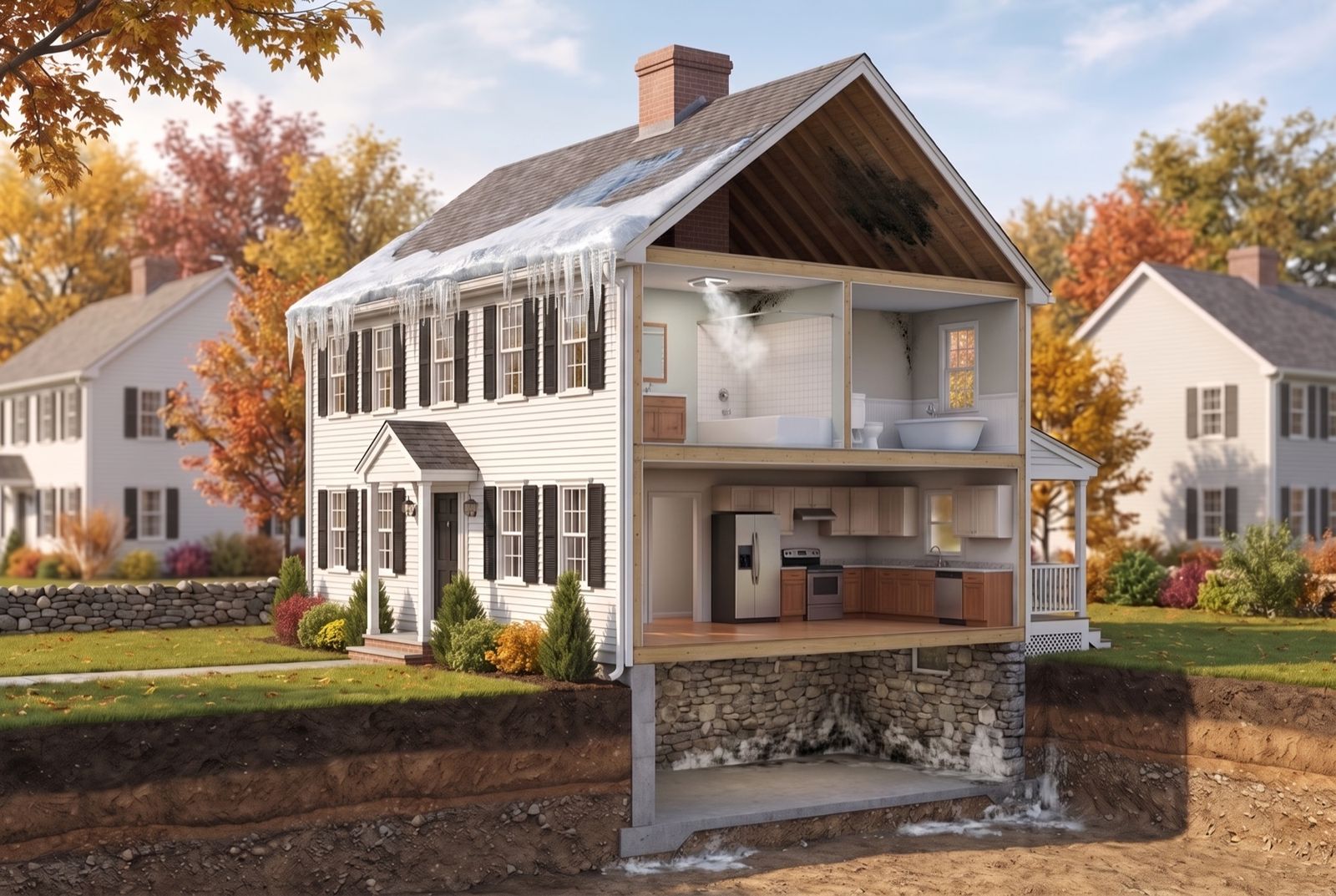
Cutaway illustration of a New England colonial home showing how three moisture sources — an ice-dammed roof, a failed bathroom fan, and a wet fieldstone basement — feed mold growth.
Ice-dammed roof Meltwater backs up under the shingles and soaks the attic sheathing.
Failed bathroom fan Shower steam with nowhere to vent condenses inside the walls.
Wet fieldstone basement Groundwater wicks through the stone and pools along the footing.
  1. Ice-dammed roof. Meltwater backs up under the shingles and soaks the attic sheathing.
  2. Failed bathroom fan. Shower steam with nowhere to vent condenses inside the walls.
  3. Wet fieldstone basement. Groundwater wicks through the stone and pools along the footing.
Mold follows moisture. The three most common paths into a New England home — and why we trace the water before we treat the surface.

How it works

A Documented Process, First Look to Verified Result.

  1. 01 Free On-Site Assessment Inspection, moisture tracing, written scope and price.
  2. 02 Containment Negative air pressure and HEPA filtration seal the work zone.
  3. 03 Removal & Treatment Contaminated materials out; surfaces HEPA-vacuumed and treated.
  4. 04 Drying & Source Correction Moisture restored to safe levels; the cause corrected.
  5. 05 Clearance Testing Independent air sampling proves the result.
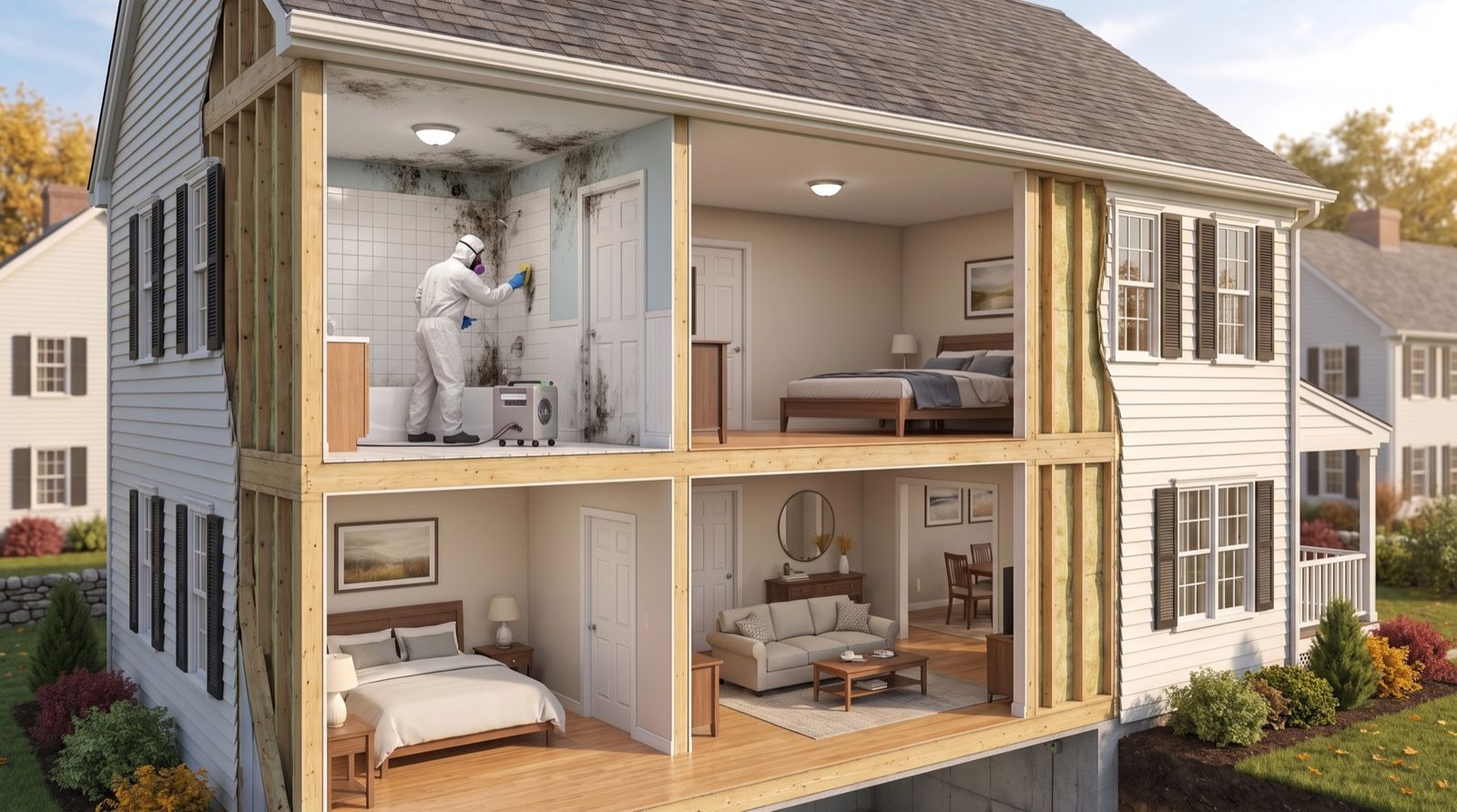
Cutaway cross-section illustration of a New England home with the side wall removed — a technician remediating mold on the bathroom shower wall with a HEPA air scrubber, while the home’s other rooms remain clean

The complete guide

Mold Removal in New England: A Complete Guide

Everything a New England homeowner needs to understand about finding, removing, and preventing mold — from why our climate makes it so common to what a professional remediation actually involves, what it costs, and how to keep it from coming back.

Why New England Homes Are Especially Prone to Mold

Mold needs three things to grow: moisture, an organic surface to feed on, and time. New England hands it all three. Our humid summers push indoor humidity well past the 60 percent threshold where mold thrives, while long, cold winters drive condensation inside walls and attics every time warm indoor air meets a cold surface.

The region’s housing stock makes it worse. Many homes are a century or more old, built over fieldstone or rubble foundations that wick groundwater straight through the basement wall. Additions, finished basements, and retrofitted insulation often trap moisture in places the original house was designed to let breathe. And the freeze-thaw cycle that produces ice dams every winter sends meltwater backing up under shingles and into attic sheathing.

The places we find mold most often are rarely a surprise once you know the pattern:

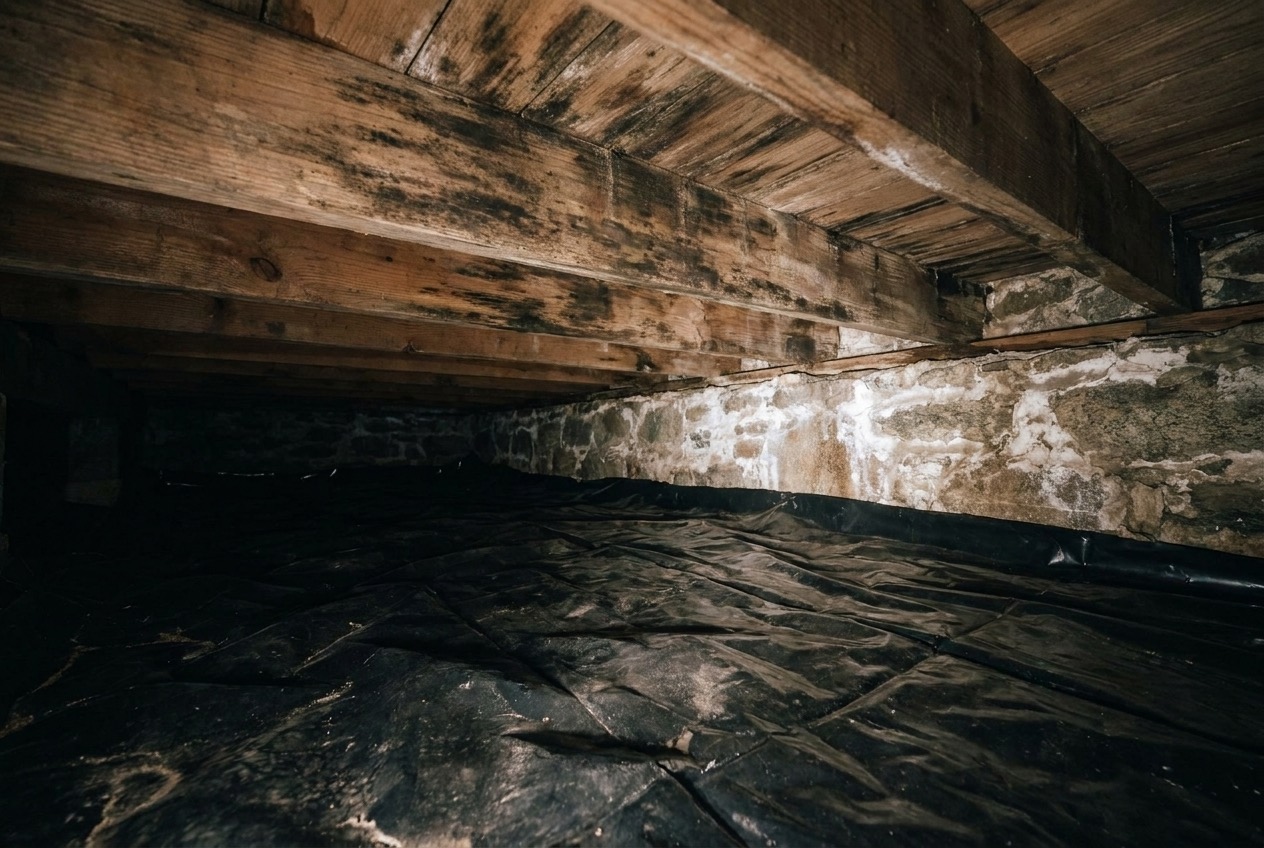
  • Basements and crawl spaces — the lowest, dampest, least-ventilated part of the house.
  • Attics — from roof leaks, ice dams, and bathroom fans that vent into the attic instead of outside.
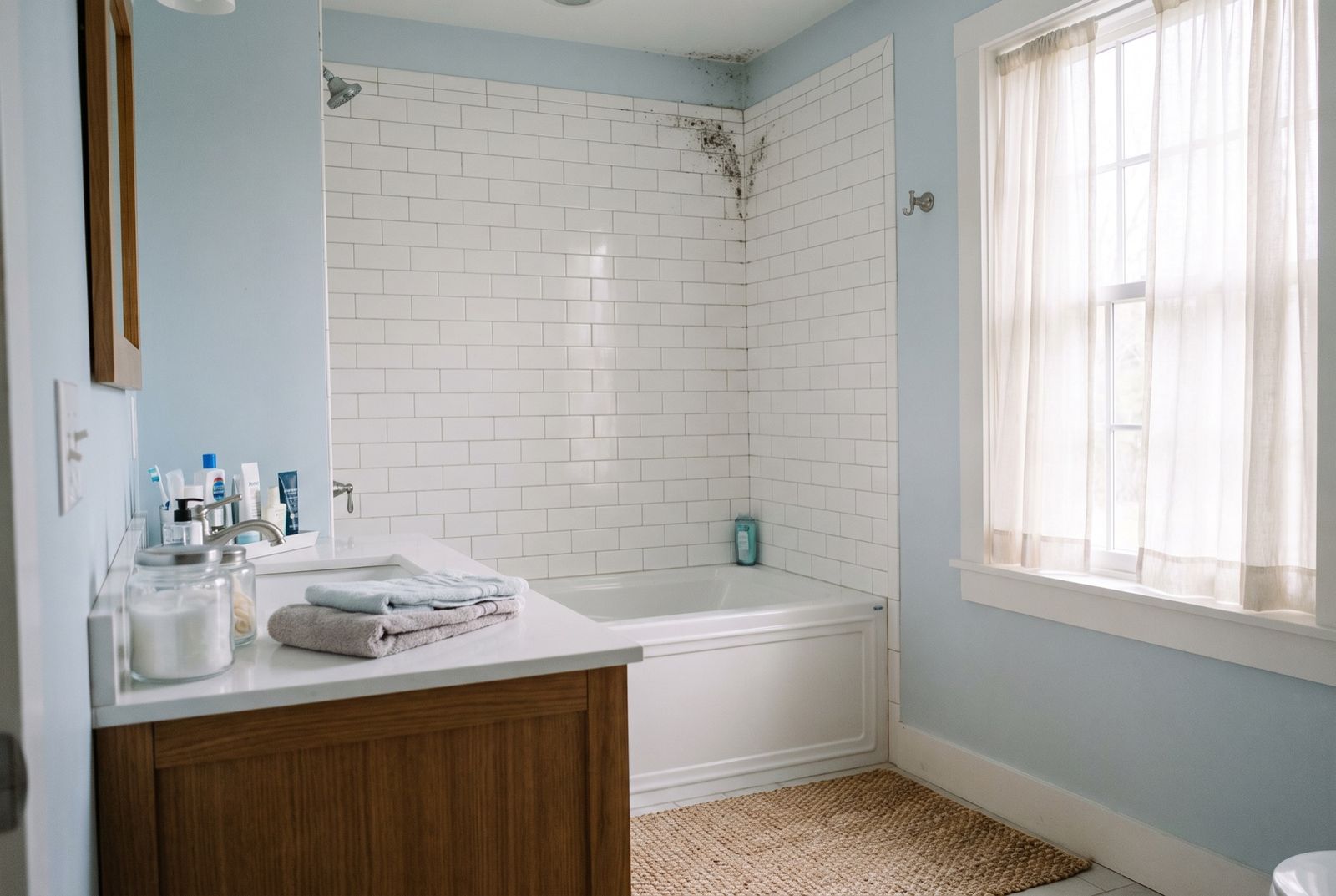
  • Bathrooms and behind kitchen cabinets — chronic humidity and slow plumbing leaks.
  • Around windows and exterior walls — where condensation collects on cold surfaces.

Because the moisture almost always comes first, lasting removal means finding and fixing the water source — not just wiping down what you can see.

Mold Removal vs. Mold Remediation: What’s the Difference?

People use the terms interchangeably, but they describe different scopes of work — and the difference matters when you’re comparing quotes.

Mold removal is the physical act of getting rid of visible mold: cleaning a surface, tearing out an affected material, treating a stain. Mold remediation is the full process of returning an environment to a normal, healthy fungal level — which includes identifying and stopping the moisture source, containing the work area so spores don’t spread, removing contaminated materials, and verifying the result.

The distinction is practical, not just semantic. Mold is a naturally occurring organism; there is no such thing as a permanently mold-free building. A contractor who promises to “remove all the mold” and stops at scrubbing the surface is treating a symptom. If the leak, the humidity, or the ventilation problem behind it is still there, the mold comes back — usually within months, often in the same spot.

Proper remediation follows a recognized standard (such as the IICRC S520) so the work is repeatable, documented, and defensible if an insurer, buyer, or inspector ever asks. That’s the difference between a problem that’s solved and one that’s postponed.
Our Mold Remediation Process, Step by Step

Every project is scoped to the specific home, but the sequence is consistent. Skipping a step is how mold comes back, so we document each one.

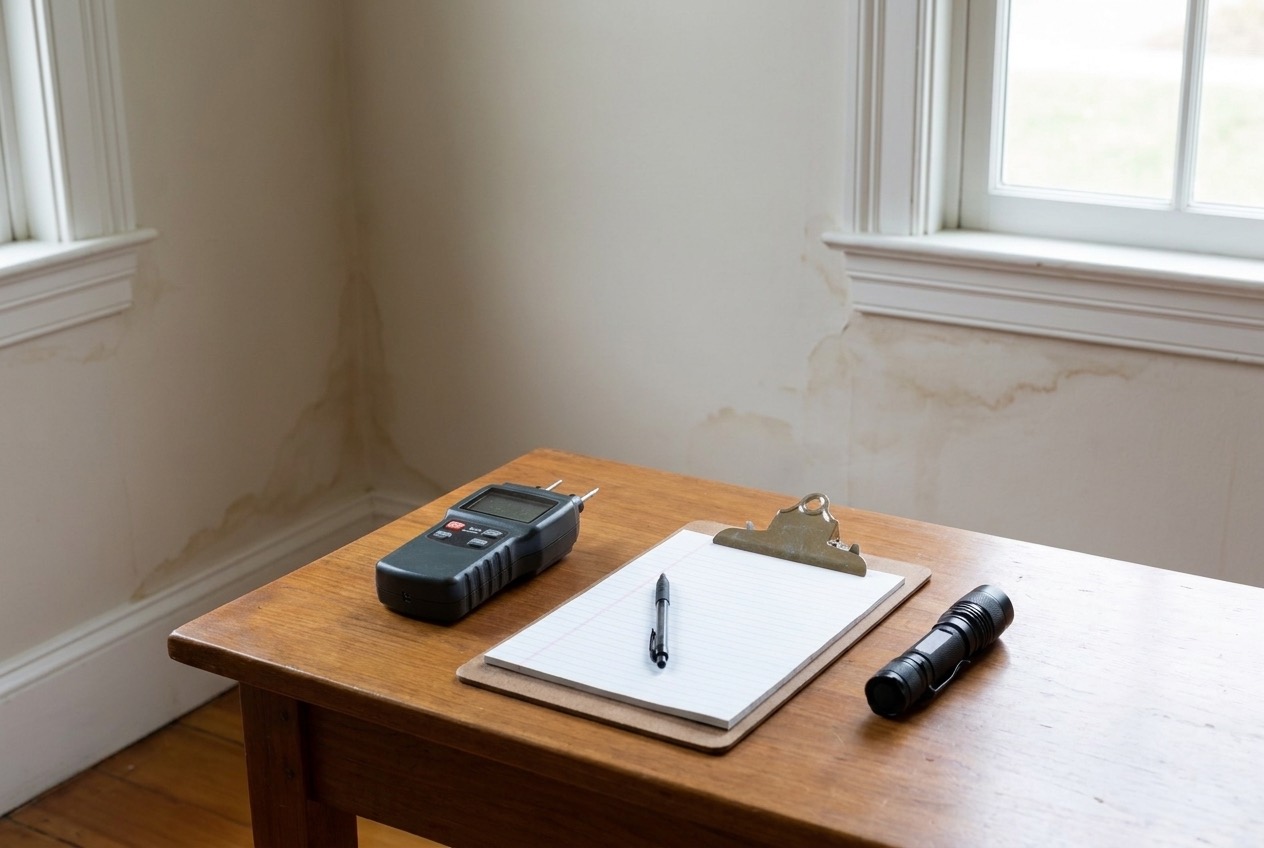
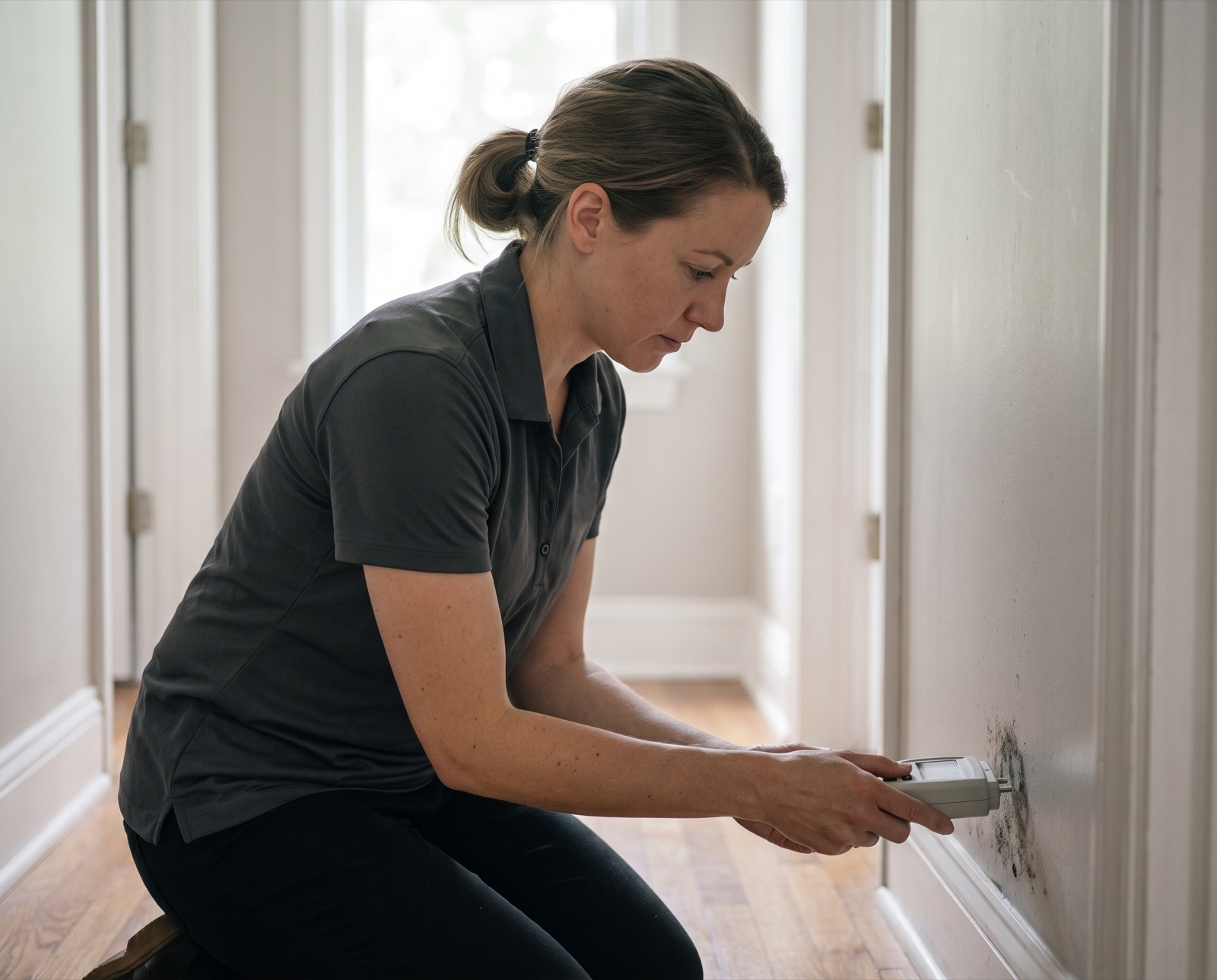
  1. Inspection and moisture mapping. We locate the growth and, more importantly, trace the water feeding it using moisture meters and thermal imaging.
  2. Containment. The work area is sealed under plastic with negative air pressure so spores can’t drift into clean parts of the house.
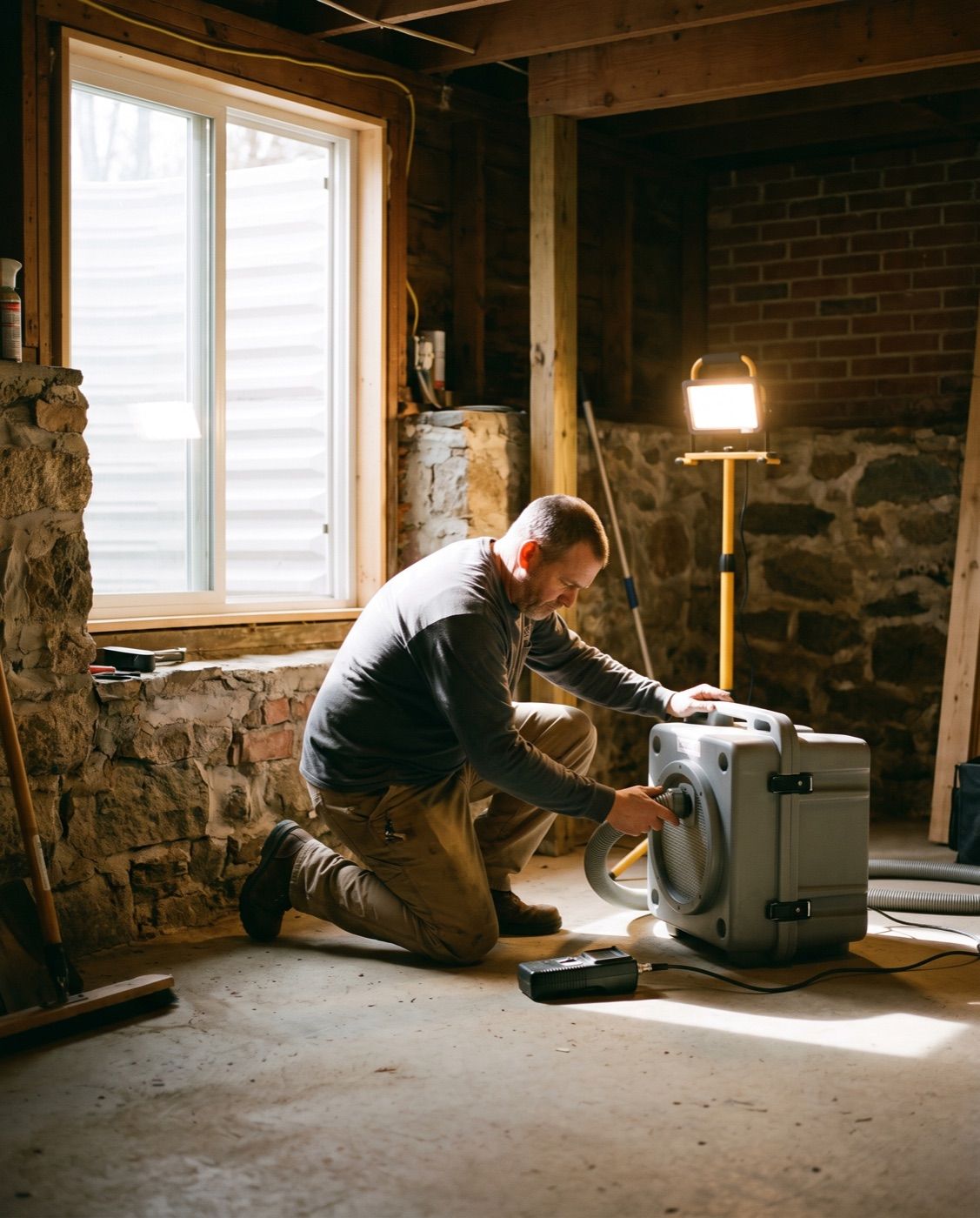
  3. Air filtration. HEPA air scrubbers run throughout the job to capture airborne spores.
  4. Removal. Porous materials that can’t be salvaged — drywall, insulation, carpet — are cut out and bagged inside containment.
  5. Cleaning and treatment. Salvageable surfaces are HEPA-vacuumed, damp-wiped, and treated with an EPA-registered antimicrobial.
  6. Drying. The structure is dried to a documented moisture target before anything is closed back up.
  7. Clearance verification. Independent testing confirms the space is back to a normal level before we rebuild.

Why the moisture source comes first

Notice that fixing the water problem frames the entire job. We won’t close a wall over a leak we haven’t resolved, because that only hides the next outbreak. You receive documentation of the moisture readings and the clearance results, so the work stands up to scrutiny later.

How Much Does Mold Removal Cost?

The honest answer is that it depends — but the variables are knowable, and a good assessment will give you a firm number before any work starts. A small, contained bathroom or closet job is at the low end; a whole basement or an attic reached by ice dams is at the high end.

The factors that move the price:

  • Size of the affected area — measured in square footage of growth, not room size.
  • Location and access — a crawl space or behind-the-wall job costs more than an open surface.
  • Materials involved — porous materials that must be removed and rebuilt add to the total.
  • Hidden mold — growth inside wall cavities or ductwork found during inspection.
  • The underlying moisture repair — a failed sump pump or roof leak is its own line item.

On insurance: homeowner policies typically cover mold when it results from a sudden, covered event — a burst pipe, for instance — but not mold from long-term neglect or deferred maintenance. We help document the cause so you can have an informed conversation with your carrier rather than a guess.

How to Keep Mold From Coming Back

Remediation solves today’s problem. Keeping the house dry is what prevents the next one. Since mold is a moisture problem, prevention is really humidity and water management.

  • Keep indoor humidity between 30 and 50 percent; run a dehumidifier in the basement through the humid months.
  • Vent bathroom and kitchen fans to the outside — never into the attic.
  • Fix leaks fast. A dripping supply line or a slow roof leak becomes mold in as little as 24 to 48 hours.
  • Keep gutters clear and grade soil to slope away from the foundation.
  • Address ice dams before they form with attic insulation and ventilation, not just after they leak.

A simple seasonal routine

Check the basement and around windows for condensation in the humid summer months, and inspect the attic and roofline after the first hard freeze and again in the spring thaw. Ten minutes a season catches most problems while they’re still cheap to fix.

When to Call a Professional (and When You Can DIY)

Not every spot of mold needs a crew. The widely cited EPA guideline is that a homeowner can reasonably handle an area smaller than about ten square feet — roughly a three-by-three patch — as long as it’s on a hard, non-porous surface and there’s no underlying health concern.

Call a professional when:

  • The affected area is larger than about ten square feet.
  • Mold is in the HVAC system or you suspect it’s spreading through the ducts.
  • There’s been significant water damage, sewage, or flooding.
  • Anyone in the home has asthma, allergies, or a compromised immune system.
  • You can smell mold but can’t find it — hidden growth needs to be located, not guessed at.

When in doubt, an assessment costs nothing and settles the question. If it’s a DIY-sized job, we’ll tell you so and how to do it safely — and if it isn’t, you’ll know exactly what you’re dealing with.

Related services

Specialized Mold Services

Black Mold Removal

Identification and safe removal of toxigenic mold species.

Learn more

Attic Mold Removal

Ice-dam and ventilation mold — New England’s most common call.

Learn more

Basement Mold Removal

Stone foundations, sump zones, and finished-basement growth.

Learn more

Crawl Space Mold Removal

Encapsulation-ready remediation for vented crawl spaces.

Learn more

Mold Testing & Inspection

Air and surface sampling when you can smell it but can’t find it.

Learn more
HEPA air scrubber and moisture meter set up during a New England remediation

Why Peniel

Trust Built on Standards, Not Slogans.

  • Licensed Across New England
    Certified remediation professionals in NH, MA, ME, VT, and CT.
  • Free On-Site Assessment
    No obligation — we assess first, quote second.
  • IICRC S520 Protocol
    Industry standard — clearance testing confirms results.
  • Rapid Response
    Emergency calls answered 24/7.
  • Clear Pricing Before Work Begins
    Full scope and cost agreed upfront.

Common questions

Before You Call, the Honest Answers.

How do I know if I need remediation or just cleaning?

Surface mildew on bathroom grout is a cleaning job. Growth on drywall, framing, or insulation — or a musty smell you can’t locate — means the material or the air needs professional attention. The free assessment settles it either way.

Is mold dangerous to my family?

Exposure to certain mold types can cause respiratory irritation, especially for people with asthma or allergies. Testing determines what’s present; remediation and clearance testing confirm it’s gone.

What does mold removal cost?

Scope drives cost — a contained attic job and a flooded finished basement are different projects. Every quote is written, fixed, and free, before any work starts.

Peniel Environmental technician assessing mold removal damage in a New England home

Get a Free Mold Assessment

Certified technicians across New England. Written scope and price before work begins — no obligation.

Prefer to talk? (603) 541-7979

Call Now