
24/7 emergency response
Ceiling Water Damage Restoration in Cranston, RI, from Johnston to Greenville and Surrounding Areas
Ceiling water damage restoration for Cranston homes and businesses. Peniel finds the source, dries the structure, and restores the ceiling, around the clock.
Call (603) 541-7979 Available 24/7 · emergency crews on standbyGet help now
Thanks, we’ll be in touch quickly.
How it works
Ceiling Water Damage Repair in Cranston, RI, First Call to Restored Ceiling
- 01 Pick Up the Phone, Any Hour Someone answers day and night. Water moving through a ceiling counts as an emergency from the first word.
- 02 We Head Your Way Fast A Peniel technician sets out for your property immediately, anywhere in the state.
- 03 Track the Water to Its Entry Point We follow the water back above the ceiling to whatever is feeding it, a roof leak, an ice dam, a burst pipe, or an overflow from the floor above, and shut it down.
- 04 Dry the Cavity and the Framing We pull or dry the soaked insulation and drywall and dry out the space above the ceiling so mold never gets its chance.
- 05 Put the Ceiling Back Right We repair and refinish the ceiling until it looks the way it did before the water arrived.
- 06 Record It All for Your Claim Every step goes on record with photos and moisture readings for your insurance claim.

Ceiling Water Damage in Cranston, RI
In Cranston, ceiling water damage is mostly a winter problem. Ice dams and roof leaks push meltwater through the ceiling below, and the older homes and hard winters here make it a familiar call every cold season.
Ceiling Water Damage Restoration in Cranston
We provide ceiling water damage restoration for homes and businesses in Cranston and the surrounding towns, including Johnston, Greenville, North Scituate, Harmony, Coventry, Chepachet, Greene, and Foster. Wherever water is coming through a ceiling in the Cranston area, we answer around the clock, find the source, dry the structure, and set the ceiling right.
How Winter Puts Water in Cranston Ceilings
Plenty of folks in Cranston meet ceiling water damage for the first time in the dead of winter, and the story almost always begins with an ice dam. Snow piles up on the roof and sits there. Warmth leaking out of the rooms below heats the underside of the roof deck, so the bottom layer of that snowpack melts even when the air outside is bitterly cold. The melt trickles down the slope until it reaches the overhang at the eaves, where no heated room sits underneath to keep things warm, and there it freezes again into a swelling berm of ice. Behind that frozen berm the water stacks up with nowhere left to run except sideways and uphill, slipping beneath the shingles, through the roof deck, and down into the ceiling of the room below.
A January thaw in Rhode Island, chased by the hard cold that always follows it, is the quickest recipe for an ice dam anyone could write. A mild afternoon loosens the snowpack, a frigid night locks it solid at the eaves, and a few rounds of that trade is all it takes to push water indoors. That is why a stain creeping across a bedroom or kitchen ceiling is one of the winter calls we field most often in Cranston.
A Ceiling Will Tell You When Something Is Wrong
Anyone who has owned a house through a few New England winters knows a ceiling seldom fails without speaking up first, and the earlier you listen the cheaper the fix. The opening word is usually a stain, a brown or yellow ring left behind where minerals in the water dried on the paint. A ring that keeps widening means water is still moving above it rather than sitting from some long-finished mishap. Paint that bubbles, blisters, or lets go of the surface is being pushed off by dampness behind it. A spot that gives softly under a fingertip has lost its structural bond, and a ceiling that visibly droops or swells is cradling a pocket of trapped water that can let loose all at once.
A musty odor with no mark to go with it is a warning all its own, since it usually means water has been resting in the cavity overhead long enough for mold to get started where nobody can see it. An active drip deserves to be treated as urgent. None of this improves by itself, and a ceiling already drooping is a safety matter as much as a repair. The jobs around Cranston that end up costing the most are nearly always the ones a family kept an eye on for a week before anybody made the call.
Protecting the Room While Help Is on the Way
Any handy neighbor will tell you the first few minutes count, and a handful of plain steps will spare a lot of grief before help pulls up. Slide furniture, electronics, and anything you care about out from under the trouble spot, set a bucket or bin beneath any steady drip, and ring it with towels to catch the splash. A bulge in the ceiling means a pocket of water is caught behind it, and left alone it can come down in one go. If water is anywhere near a light fixture or a ceiling fan, cut power to the room at the breaker, and keep the family clear of the sagging area.
Then pick up the phone. The most valuable thing a homeowner can do is get the water stopped and the drying underway quickly. Everything past that point, from tracking the leak to putting the finish back, is our work, and the sooner we reach your door in Cranston the less of the ceiling and the room beneath it is lost.
The Roofs and Homes Most at Risk
Not every roof is equally likely to let water through. The ones that fail tend to share the same handful of traits, from a shallow pitch that holds snow instead of shedding it, to a short overhang that leaves little room to manage water at the eaves, to thin or settled attic insulation that lets too much heat reach the deck, to flashing worn loose over the years at the exact seams water looks for. Any one is a weakness. Together they are an open invitation.
The older neighborhoods of Cranston and nearby towns like Johnston, Greenville, and North Scituate show it most, much of the housing built around 1958 or before. With the area averaging about 37 inches of snow a year, that weight sitting on an aging, under-insulated roof is where an ice dam starts, and the ceiling below is where it ends up.
Water Reaches a Ceiling in Every Season
Ask around the neighborhood and you will hear plenty of ceiling stories that had nothing to do with snow. Winter drives most ceiling water damage in Cranston, but the other causes turn up all year long. A lifted or cracked shingle, a failed seal around a chimney or vent, or a roof battered by a summer downpour will feed water into the same ceiling an ice dam would. A frozen or burst pipe in the attic or the floor above empties itself all at once and drains straight down, while an overflowing tub, toilet, dishwasher, or washing machine upstairs takes the shortest route to the ceiling underneath.
Wherever it starts, the water almost never lands straight below its entry point. It travels along the top of the drywall and rides the joists, wetting insulation and framing several feet away before a stain ever shows. That is why the visible mark is rarely right beneath the leak, and why patching the stain while ignoring the source leaves the real trouble in place. On every ceiling water damage call we take, whatever the season, the first task is tracing backward from the symptom to the spot where water is actually getting in.
The Order That Makes a Ceiling Repair Last
Folks sometimes figure a ceiling job is just new drywall and a coat of paint, but the sequence is what makes the repair stick. We begin by hunting down the source rather than the stain and shutting the water off where it enters. From there we open the ceiling where it is needed, pull out soaked insulation along with any drywall past saving, and set up our drying equipment. We never call something dry because it looks or feels that way. We take the framing and the cavity overhead down to a documented dry standard with moisture meters, since water left behind is what turns one repair into two.
Only when the structure reads dry do we build back. We insulate, hang and finish fresh drywall, prime the repaired areas with a stain-blocking sealer so the old marks cannot creep through, and paint until the ceiling belongs to the room again. Rushing past the drying stage to close a ceiling sooner is the most common reason ceiling water damage returns a few weeks later through brand-new paint. Handled in the proper order, the ceiling is sound and the cause is gone. Handled backward, both come back, and the second round is always tougher than the first.
Every Hour a Ceiling Stays Wet Costs You More
Around here people are used to waiting out weather, but a wet ceiling is the one thing you should never wait out, because the clock starts when the water gets in, not when you happen to spot it. Drywall and insulation take on water fast and hold it, so every hour they sit soaked means more material that must be torn out instead of dried, more framing put at risk, and more time for mold to settle into the cavity above. A leak caught the same day often ends as a drying job and a modest patch. That identical leak, ignored for a week, can mean a gutted ceiling, all-new insulation, and a mold remediation stacked on top of the repair.
That is the reason we treat a spreading stain or an active drip in Cranston as an emergency and answer at any hour. Getting a technician to the house quickly, shutting off the source, and starting the drying is what keeps a small ceiling water damage repair from growing into a whole-room project, and it is the single biggest lever a homeowner has for holding down the cost and the upheaval.
Old Plaster, Modern Drywall, and How Each Ceiling Fails
Anyone who has spent time in both an older place and a newer build knows ceilings are not all made alike, and how one is built decides how it fails and how we restore it. Modern drywall stains and sags in a fairly predictable pattern, and a bad section can be cut away and replaced cleanly. The plaster-and-lath ceilings common in Cranston's older homes carry water differently, since the plaster can hang together while the lath and the keys behind it go soft, meaning a ceiling that still looks fine may already be unsound. Textured and popcorn finishes add a wrinkle of their own, because the texture has to be matched or the entire plane refinished before the repair disappears.
Suspended and tile ceilings, which show up more often in commercial buildings, keep the leak hidden above the grid and announce it by staining or dropping tiles. We work out exactly what kind of ceiling we are standing under before we begin, so the repair suits the ceiling instead of fighting it, and so the finished surface melts into the room rather than reading as a patch.
Looking After What Sits Under the Ceiling
Most folks fret over the ceiling itself, but the water coming through it rarely stops there. It falls onto furniture, flooring, electronics, and keepsakes in the room below, and in Cranston's older multi-story houses it often works its way down more than one floor. Setting a room right means dealing with what fills it, not just the surface overhead. We move and shield contents out of the affected space, document everything the water reached for your claim, and help line up cleaning or storage for whatever needs it while the structure dries and the ceiling is rebuilt.
Caring for the whole room instead of the ceiling alone is what gets a household back on its feet quickest, and it stops a water problem from quietly turning into a lost-belongings problem layered on top of the repair.
Where Mold Hides After Ceiling Water Damage
Every longtime homeowner knows that musty smell, and the space above a ceiling is one of the easiest spots in a house for it to begin. The cavity is dark, still, starved of airflow, and stocked with exactly what mold likes to feed on, from paper-faced drywall to wood framing to the organic dust that settles into insulation. Give it water and a warm day or two, and growth can be underway before the surface below has even finished staining. Since all of it happens inside the cavity, you rarely see it, only catch the odor it gives off.
This is exactly why we push so hard on drying speed with every job. The faster and more completely the structure dries, the smaller the chance of a water problem becoming a mold problem, and the smaller the chance of paying to open the same ceiling twice. When we do find growth already settled in, we contain and remediate it before any rebuild begins, rather than sealing it behind fresh drywall where it would simply keep spreading.
Paperwork That Keeps Your Claim Moving
Plenty of our neighbors hesitate to call because they dread wrangling with insurance, but most sudden ceiling water damage in Cranston is precisely the kind of loss a homeowners policy exists to cover. A burst pipe, a failed appliance line, or a storm-driven roof leak is generally read as a sudden and accidental event, and that is what carriers pay on. What they will not pay on is neglect, so a slow drip ignored for months is often excluded, which is one more reason to act the day a stain appears instead of watching it grow.
We assemble the claim while we work. We photograph the damage before and during the job, log moisture readings, and write up a clear scope so your adjuster has everything needed to approve the work without a lot of back and forth. Having that record often separates a claim that sails through from one that stalls, and it costs nothing extra to have it kept properly from the first day.
Permits and the Cranston Building Department
Once the water is stopped and the structure is dry, putting a ceiling back can mean more than drywall and paint. Depending on how far the damage reached, replacing insulation, wiring, or framing may call for a permit from your local building department, and any structural repair almost always does. We handle that side of the job with you, pulling the permits a restoration needs and meeting the inspection, so the finished ceiling is signed off rather than just covered over.
If you want to check what a repair like yours involves before work begins, the Cranston building department is where those questions are answered. You can reach it here:
Cranston Department of Building Inspections & Zoning
155 Gansett Avenue (rear), Cranston, RI 02910
(401) 461-1000
When the Ceiling Fails Over a Cranston Business
Shop owners and landlords around Cranston shoulder worries a homeowner never has to, since ceiling water damage in a business brings closed floors, ruined stock and equipment, and real pressure to reopen fast. Commercial roofs add troubles of their own, from ponding on flat sections and failed rooftop units to sprinkler and HVAC leaks that send water straight down through a suspended ceiling. We answer commercial ceiling water damage the same way we answer a home, at any hour, tracing the source, drying the structure, and staging the work so as much of the property as possible stays open.
Documentation for the insurance claim, and for whatever building or health requirements apply, travels with every commercial job, so the paperwork keeps pace with the repair instead of holding the reopening hostage.
Fall Chores That Spare Your Ceiling Come January
The neighbors who never seem to have winter ceiling trouble are usually the ones who spent a Saturday in the attic before the cold set in. Some ceiling water damage cannot be headed off, but a great deal of the winter kind can be made far less likely, and most of that work happens out of sight. Ice dams feed on heat escaping into the attic, so the most effective fixes live up there. Solid attic insulation keeps household warmth away from the roof deck, proper ventilation keeps the deck cold and even so snow does not melt in patches, and sealing the spots where warm air sneaks upward, around light fixtures, hatches, and chimneys, accomplishes more than any amount of clearing snow from below.
Clearing gutters and downspouts before the first snow gives meltwater a way off the roof once it thaws, and a roof rake used carefully after a heavy storm pulls snow back from the eaves where dams take hold. None of it substitutes for a sound roof and a well-insulated attic, but taken together these chores lift real pressure off a Cranston roof through the meanest stretch of the year.
Cranston Ceiling Water Damage Handled Around the Clock
When ceiling water damage turns up in your Cranston home, we are the neighbors to call, from the first ring of the phone to the final coat of paint, and we cover the surrounding towns as well. The moment a stain starts to spread, a ceiling begins to sag, or water starts to drip, reach us at any hour of the day or night. We find the source, dry the structure, and restore the ceiling before ceiling water damage travels any deeper into your home.
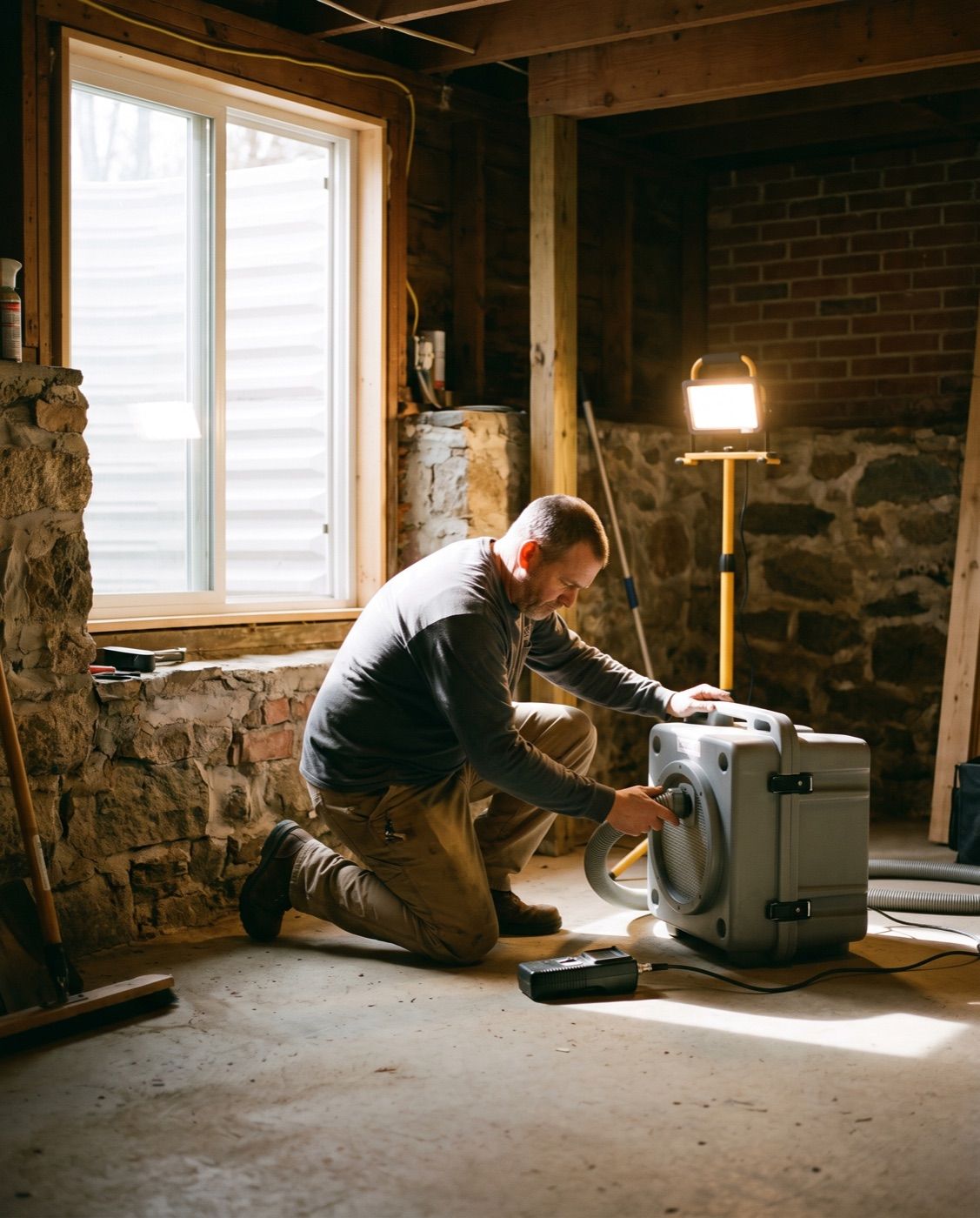
Why Peniel
Trust Built on Standards, Not Slogans.
- Answered Live, Day or NightA soaked ceiling can come down. Real people pick up at any hour so we can be on site before the damage travels.
- Crews Who Know New England HousesOur crews work this region's housing stock and its winters every day, from the shoreline to the hill towns.
- We Chase the Leak, Not the MarkA stained ceiling is only the symptom. We follow the water to where it actually enters, so the repair holds.
- A Paper Trail Your Adjuster Can UseScope, moisture readings, and photos all go down in writing, exactly the detail an insurance adjuster looks for.
Common questions
Before You Call, the Honest Answers.
How does water end up in my ceiling in the first place?
Nearly all ceiling water damage traces back to a roof leak, a winter ice dam, a frozen or burst pipe, or an overflow from a bathroom or appliance on the floor above.
My ceiling has a stain and a slight bulge. Should I be worried?
Yes. A stain that keeps growing means water is still on the move, and a bulging or sagging ceiling may be holding trapped water that can drop without warning. Have both looked at right away.
Can you actually figure out where the leak is coming from?
We can. We trace the water back to its entry point above the ceiling and stop it there before restoring the finish, so the trouble does not come back.
Will you help with my insurance claim?
Often, yes. We put the damage, the scope of work, and the moisture readings in writing so you have what your adjuster needs.
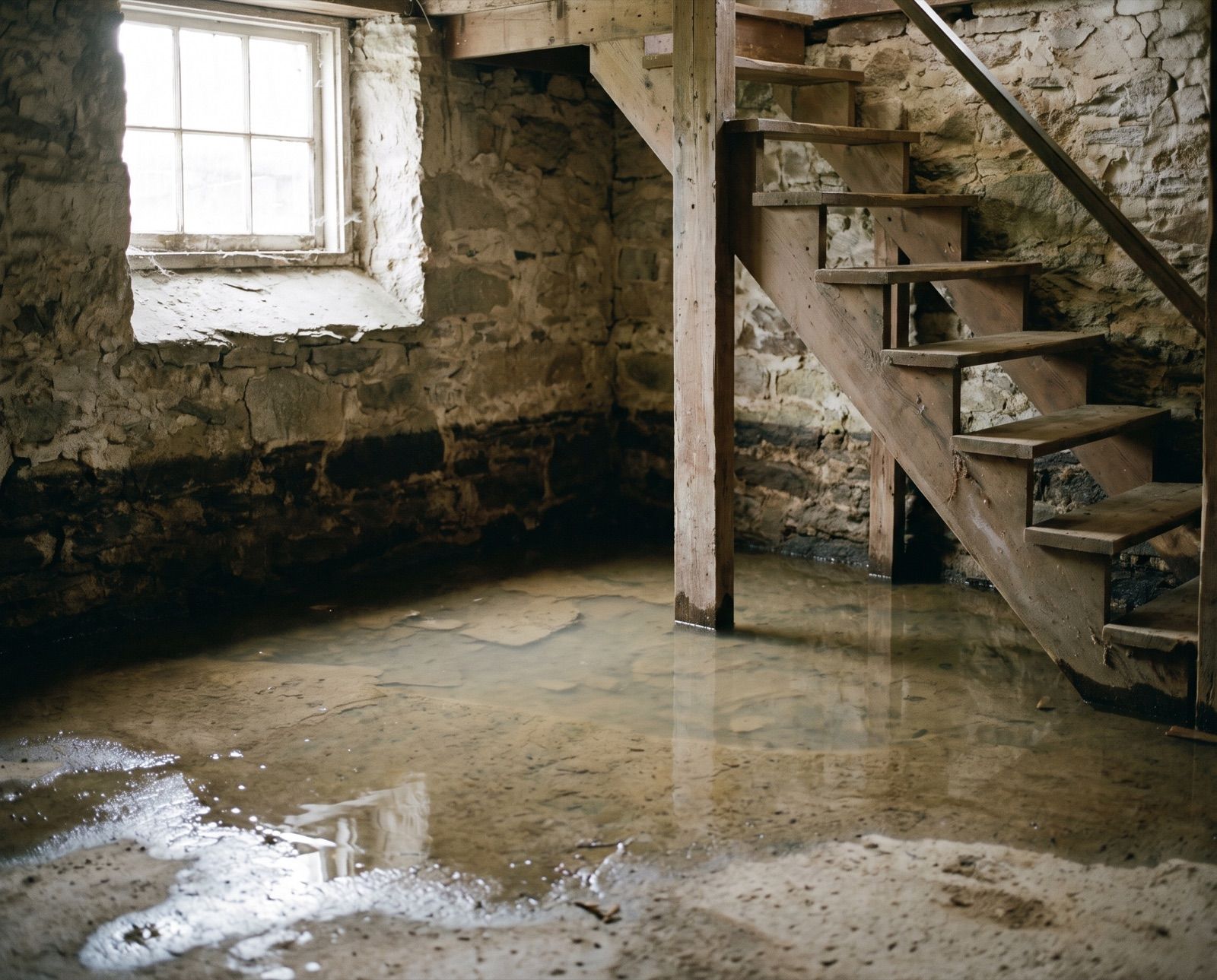
Water Coming Through a Ceiling in Cranston, RI?
Tell us what you are seeing and we will be on our way. Peniel handles ceiling water damage across Cranston and the surrounding towns, 24/7.
Prefer to talk? (603) 541-7979
Thanks, we’ll be in touch quickly.