
24/7 emergency response
Ceiling Water Damage Restoration in Concord, NH, from Hooksett to Franklin and Surrounding Areas
Ceiling water damage restoration for Concord homes and businesses, across the Merrimack Valley. Peniel finds the source, dries the structure, and restores the ceiling, around the clock.
Call (603) 541-7979 Available 24/7 · emergency crews on standbyGet help now
Thanks, we’ll be in touch quickly.
How it works
Ceiling Water Damage Repair in Concord, NH, First Call to Restored Ceiling
- 01 Call Us at Any Hour Someone answers around the clock. Water moving through a ceiling counts as an emergency from the moment you call.
- 02 Fast Arrival at Your Property A Peniel technician sets out for your property straight away, anywhere in the state.
- 03 Trace the Water and Shut It Off We follow the water back to where it starts above the ceiling, whether that is a roof leak, an ice dam, a burst pipe, or an overflow from the floor above, and we stop it there.
- 04 Dry Everything Out Saturated insulation and drywall either come out or come dry, and the cavity above the ceiling is dried so mold does not follow.
- 05 Rebuild the Ceiling We repair and refinish the ceiling so it looks the way it did before the water came through.
- 06 Record It for the Claim Every stage is captured in photos and moisture readings for your insurance claim.

Ceiling Water Damage in Concord, NH
In Concord, ceiling water damage is mostly a winter problem. Ice dams and roof leaks push meltwater through the ceiling below, and the older homes and hard winters of the Merrimack Valley make it a familiar call every cold season.
Ceiling Water Damage Restoration in Concord
We provide ceiling water damage restoration for homes and businesses in Concord and the surrounding towns, including Hooksett, Franklin, Bow, Pembroke, Hopkinton, Loudon, Northfield, Henniker, Epsom, New London, Allenstown, Pittsfield, Boscawen, Warner, Dunbarton, Chichester, Andover, Canterbury, Newbury, Sutton, Webster, Bradford, Salisbury, Wilmot, Danbury, and Laconia. Wherever water is coming through a ceiling in the Concord area, we answer around the clock, find the source, dry the structure, and set the ceiling right.
Ice Dams Are Behind Most Winter Ceiling Water Damage in Concord
Ceiling water damage in Concord peaks in winter, and an ice dam at the roof edge is behind most of it. The chain that produces one starts with snow that settles on the roof and stays put. Warmth leaking up out of the living space heats the underside of the deck, so the pack melts from beneath even when the outside air is bitterly cold. That meltwater slides down the slope until it reaches the overhang at the eaves, where nothing heated sits below and the surface stays frozen, so the water hardens there into a thickening wedge of ice. Water backing up behind that wedge has nowhere left to travel except sideways and upward, under the shingles and through the roof deck, from where it drops into the ceiling below.
The freeze-thaw swings that follow a January thaw in New Hampshire build a dam faster than any other pattern. A mild afternoon softens the pack, a cold night locks the eaves solid again, and a handful of those cycles is enough to push water inside. That is why a stain creeping across a bedroom or kitchen ceiling is one of the winter calls we take most often in Concord.
What a Stain, a Bubble, or a Sag Is Telling You
Catching the damage at its first sign is what keeps the repair small, and a ceiling gives up its signs in sequence. A stain comes first, a brown or yellow ring left behind as minerals in the water dry on the surface. A ring that is still widening tells you water is moving above it right now rather than sitting from something that finished weeks ago. Paint that bubbles, blisters, or peels is lifting because the surface behind it has gone wet. A patch that feels soft or spongy has lost its structural bond, and a section that visibly sags or bulges is holding a pocket of trapped water that can let go all at once.
A musty smell with no stain in sight is a warning of its own, since it usually means water has been sitting in the cavity above long enough for mold to take hold where nobody can see it. An active drip should be treated as urgent. None of these signs improve on their own, and a ceiling that has started to sag is a safety problem as much as a repair. The worst outcomes we see in Concord come from ceilings that were watched for a week before anyone picked up the phone.
Protecting the Room Below While You Wait for Us
A few minutes of work below a leaking ceiling saves most of what sits in the room. Furniture, electronics, and anything of value should come out from underneath, with a bucket or bin under any active drip and towels around it to catch the spread. A bulging section means a pocket of water is trapped behind it, and left alone it can release all at once. Power to the room should go off at the breaker if water is anywhere near a light fixture or a ceiling fan, and nobody should stand under the sagging area.
The call comes next, and it is the step that decides the rest. Getting the source stopped and the drying under way quickly is what determines how much of the ceiling survives. Everything past that point belongs to us, from tracing the leak back to matching the finish, and the sooner we reach you in Concord the less of the ceiling and the room beneath it is lost.
The Roofs and Homes Most at Risk
Not every roof is equally likely to let water through. The ones that fail tend to share the same handful of traits, from a shallow pitch that holds snow instead of shedding it, to a short overhang that leaves little room to manage water at the eaves, to thin or settled attic insulation that lets too much heat reach the deck, to flashing worn loose over the years at the exact seams water looks for. Any one is a weakness. Together they are an open invitation.
Across Concord and nearby towns like Hooksett, Franklin, and Bow, the roofs that let water through are the ones holding a heavy snow load over a warm attic, and the area sees about 68 inches of snow in a normal winter. Season after season, that weight settling and melting on the roof is what drives water down into the ceiling.
The Merrimack, Rattlesnake Hill, and Concord Ceilings
Concord sits along the Merrimack River in the valley that shares its name, with Rattlesnake Hill rising to the north above one of New Hampshire's largest granite quarries and the Turkey River crossing the southwestern corner. The oldest part of the city is older than the state. The first house lots were laid out in 1726 at the north end of Main Street, and the Georgian, Federal, and Greek Revival homes that followed still line North Main Street and Penacook Street. Roofs of that age were framed long before deep attic insulation, so heat escapes upward, snow melts from underneath, and the ice that forms at the cold eaves sends water back under the shingles and into the ceiling below.
Year-Round Sources That End Up in the Same Ceiling
The same stained ceiling turns up in July as in February, with only the source changed. Winter drives most ceiling water damage in Concord, though several other causes run all year. A lifted or cracked shingle, a failed seal at a chimney or a vent, or storm damage after a summer downpour will feed the same ceiling an ice dam would. A frozen or burst pipe in the attic or the floor above releases everything at once and drains straight down, while an overflowing tub, toilet, dishwasher, or washing machine upstairs takes the shortest route to the ceiling underneath.
The mark on the ceiling almost never sits below the point of entry, whatever the source. Water travels along the top of the drywall and follows the joists, soaking insulation and framing several feet away before anything shows through. Chasing the stain instead of the source therefore leaves the real problem sitting exactly where it was. Working backward from the symptom to the spot where water is actually getting in is the first job on any ceiling water damage call, in any season.
The Order That Makes a Ceiling Repair Last
A ceiling repair holds because of the order it is done in, not the neatness of the patch. We begin at the source rather than the stain and stop the water where it enters. Then we open the ceiling where we need access, pull out saturated insulation along with any drywall too far gone to save, and set drying equipment. Dryness is never judged by how a surface looks or feels. Moisture meters bring the framing and the cavity above the ceiling down to a documented dry standard, because water left behind is what turns a repair into a return visit.
Rebuilding starts only once the structure reads dry. We insulate, hang and finish new drywall, prime the affected areas with a stain-blocking sealer so old marks cannot bleed back through, and repaint so the ceiling matches the rest of the room. Closing a ceiling early to save a day is the most common reason ceiling water damage reappears, usually through fresh paint a few weeks on. Handled in the right order, the ceiling is sound and the cause is gone. Handled in reverse, both come back, and the second repair is always harder than the first.
Why the First Hours Set the Size of the Job
The size of the job is settled within the first few hours, long before anyone decides what to repair. The clock on ceiling water damage starts when water gets in, not when someone notices it. Drywall and insulation pull moisture in fast, and every hour they stay wet means more material that has to come out rather than dry, more framing at risk, and more time for mold to establish in the cavity overhead. A leak caught the same day is usually drying plus a modest patch. The same leak left for a week can mean a torn-out ceiling, replaced insulation, and mold remediation stacked on top of the repair.
That is why a spreading stain or an active drip in Concord gets treated as an emergency and answered around the clock. Reaching the property quickly, killing the source, and starting the drying is what holds a small ceiling repair back from becoming a whole-room project, and nothing else a homeowner does moves the cost and the disruption as much.
The Repair Follows Whatever Ceiling You Have
What a finished repair ends up looking like comes down to how the ceiling was built. Modern drywall stains and sags predictably, so sections can be cut out and replaced cleanly. Older plaster and lath, common across Concord homes, holds water differently, since the plaster can stay together while the lath and the keys behind it soften, leaving a ceiling that looks intact and is already unsound. Textured and popcorn finishes add a further complication, because the texture has to be matched or the whole plane refinished before the repair disappears.
Suspended and tile ceilings, more common in commercial space, hide the leak above the grid and give up stained or sagging tiles as the first clue. Identifying what we are working with before anything is opened lets the repair suit the ceiling rather than fight it, so the finished result reads as part of the room instead of standing out as a patch.
The Room Below Comes Back Too
Getting a household back to normal means restoring the whole room, not only the ceiling over it. Ceiling water damage rarely stops at the ceiling, since whatever comes through lands on furniture, flooring, electronics, and belongings underneath, and in Concord's older multi-story homes it often reaches more than one floor. Handling what is in the room is part of putting the room right. We move and protect contents out of the affected area, document what the water reached for your claim, and help arrange cleaning or storage for anything that needs it while the structure dries and the ceiling is repaired.
Treating the room as a whole is what shortens the disruption most, and it stops a water problem from quietly turning into a contents loss on top of the repair.
Claims, Coverage, and the Paperwork We Build as We Go
Most sudden ceiling water damage in Concord is exactly what a homeowners policy exists to cover. A burst pipe, an appliance line that let go, or a storm-driven roof leak reads as a sudden and accidental event, which is the category carriers pay on. Neglect is the category they do not, so a slow drip left for months is often excluded, one more reason to act when a stain first appears rather than watch it widen.
The claim gets built while the work happens. We photograph the damage before and during the job, log moisture readings, and write a clear scope so your adjuster has what they need to approve the work without a round of back and forth. That record is often what separates a claim that moves quickly from one that stalls, and having it done properly the first time costs nothing.
Permits and the Concord Building Department
Once the water is stopped and the structure is dry, putting a ceiling back can mean more than drywall and paint. Depending on how far the damage reached, replacing insulation, wiring, or framing may call for a permit from your local building department, and any structural repair almost always does. We handle that side of the job with you, pulling the permits a restoration needs and meeting the inspection, so the finished ceiling is signed off rather than just covered over.
If you want to check what a repair like yours involves before work begins, the Concord building department is where those questions are answered. You can reach it here:
Concord Code Administration Division
37 Green Street, Concord, NH 03301
(603) 225-8580
Commercial Ceilings and the Cost of Staying Closed
A ceiling failure in a Concord business costs far more than the ceiling, from closed floors to ruined stock and equipment to the pressure of a delayed reopening. Commercial roofs contribute sources of their own, including flat-roof ponding, failed rooftop units, and sprinkler or HVAC leaks that send water straight down through a suspended ceiling. Our response to commercial ceiling water damage runs the same way, around the clock, tracing the source, drying the structure, and phasing the work so as much of the property stays open as possible.
Documentation for the insurance claim, and for any building or health requirements in play, is part of every commercial job, so the paperwork keeps pace with the repair instead of holding up the reopening.
Attic Work That Takes the Pressure Off a Winter Roof
A large share of the winter damage can be made far less likely, and nearly all of that work happens where nobody looks. Some ceiling water damage cannot be prevented at all. Because ice dams are driven by heat escaping into the attic, the steps that count are up there. Solid attic insulation keeps living-space heat away from the roof deck, proper ventilation holds the deck cold and even so snow does not melt in patches, and sealing the gaps where warm air leaks through around lights, hatches, and chimneys does more than any amount of clearing snow from below.
Clear gutters and downspouts before the snow arrives let water leave the roof once it melts, and a roof rake used safely after a heavy storm pulls snow back from the eaves where dams form. None of it substitutes for a sound roof and a well-insulated attic, though together these steps take real strain off a Concord roof through the hardest months of the year.
Getting a Concord Ceiling Back, Start to Finish
A ceiling that shows no sign anything ever happened to it is the end point, and reaching it starts with one phone call. Peniel covers Concord and the surrounding towns at any hour, because a stain that widens overnight or a drip that opens up at midnight will not wait for business hours. We trace the leak to its entry point, dry the structure to a measured standard, and rebuild the finish, so ceiling water damage stops where it is rather than working deeper into the house.
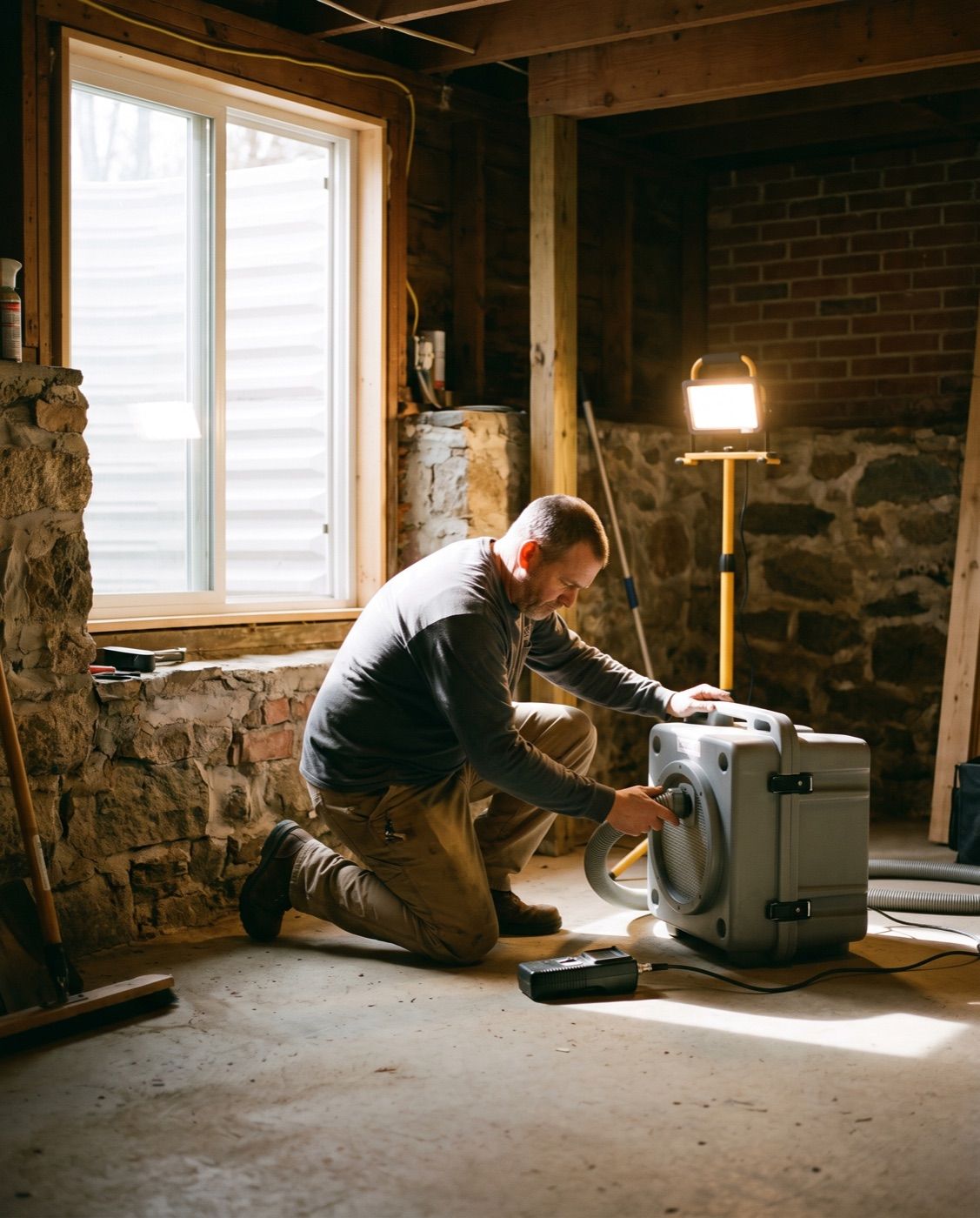
Why Peniel
Trust Built on Standards, Not Slogans.
- Answered Day and NightA saturated ceiling can come down. Real people pick up at any hour, so we can be on site before the damage widens.
- Crews Who Know New EnglandOur crews work the region's housing stock and winter conditions every season, from the coast through the hill towns.
- The Source Gets Fixed, Not the StainA ceiling stain is only the symptom. We follow the water to its actual point of entry so the repair holds.
- Written Up for Your AdjusterScope, moisture readings, and photos all go on paper, in the detail an adjuster expects.
Common questions
Before You Call, the Honest Answers.
What makes a ceiling take on water damage?
Most cases trace back to a roof leak, a winter ice dam, a burst or frozen pipe, or an overflow from a bathroom or an appliance on the floor above.
Does a stained or sagging ceiling need urgent attention?
A stain that keeps spreading means water is still moving, and a sagging or bulging ceiling may be holding trapped water that can give way. Both warrant a look straight away.
Can you tell where the water is coming from?
Yes. We follow the water back to its source above the ceiling and stop it before any finish work, so the problem does not return.
Do you deal with insurance companies?
Often, yes. We put the damage, the scope, and the moisture readings in writing so you have what your adjuster needs.
Water Coming Through a Ceiling in Concord, NH?
Tell us what you are seeing and we will be on our way. Peniel handles ceiling water damage across Concord and the surrounding towns, 24/7.
Prefer to talk? (603) 541-7979
Thanks, we’ll be in touch quickly.